


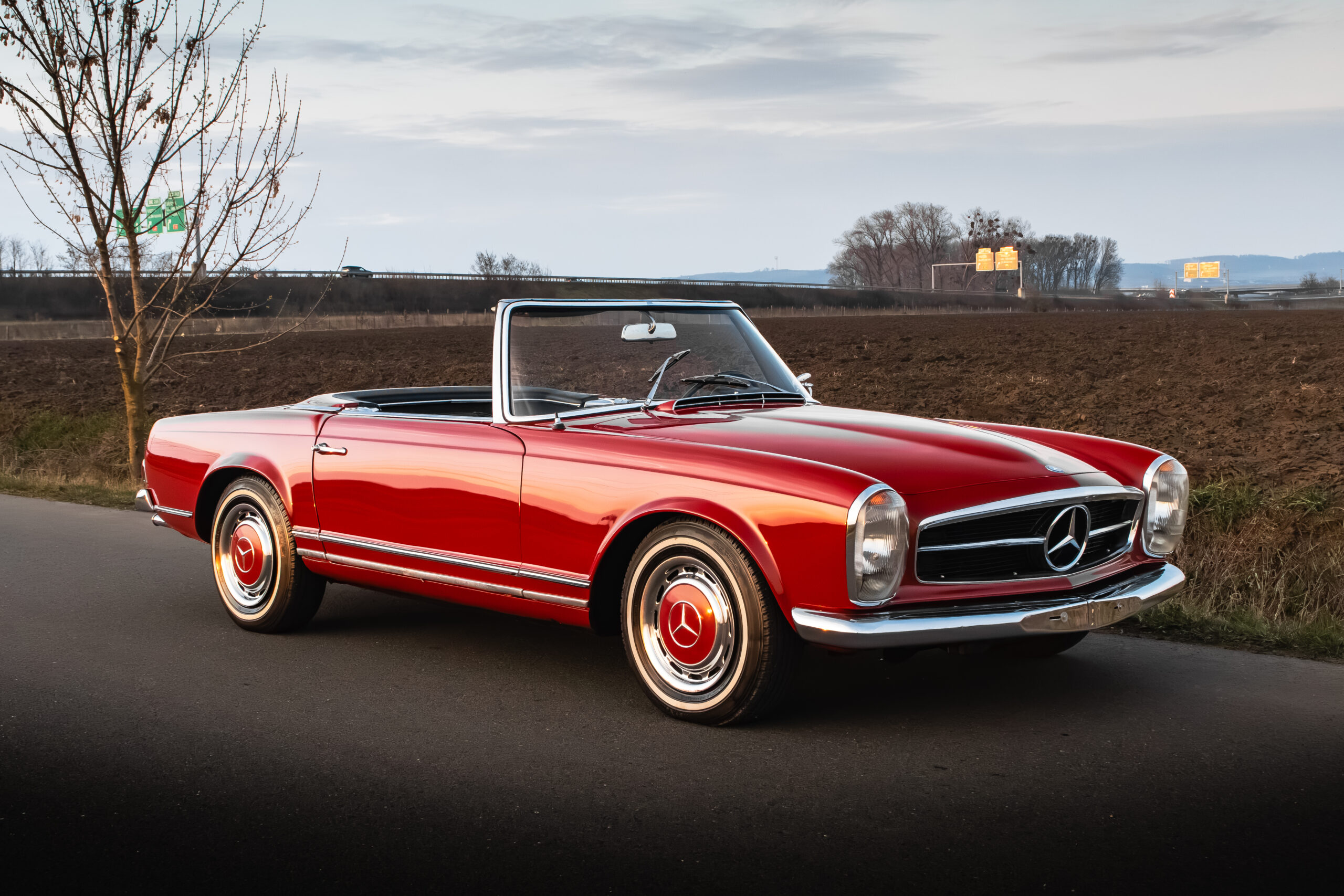
Mercedes-Benz 230 SL W113
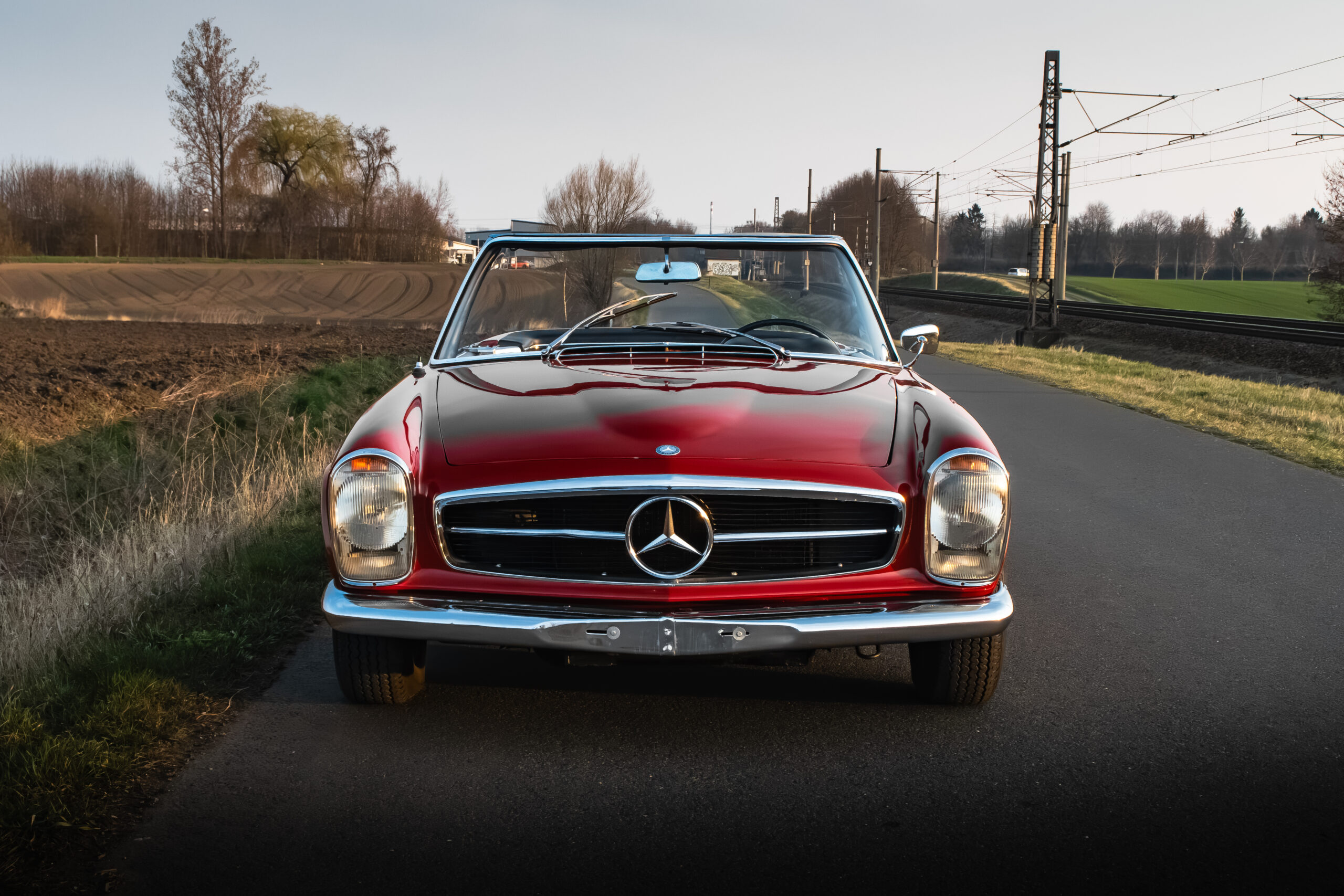
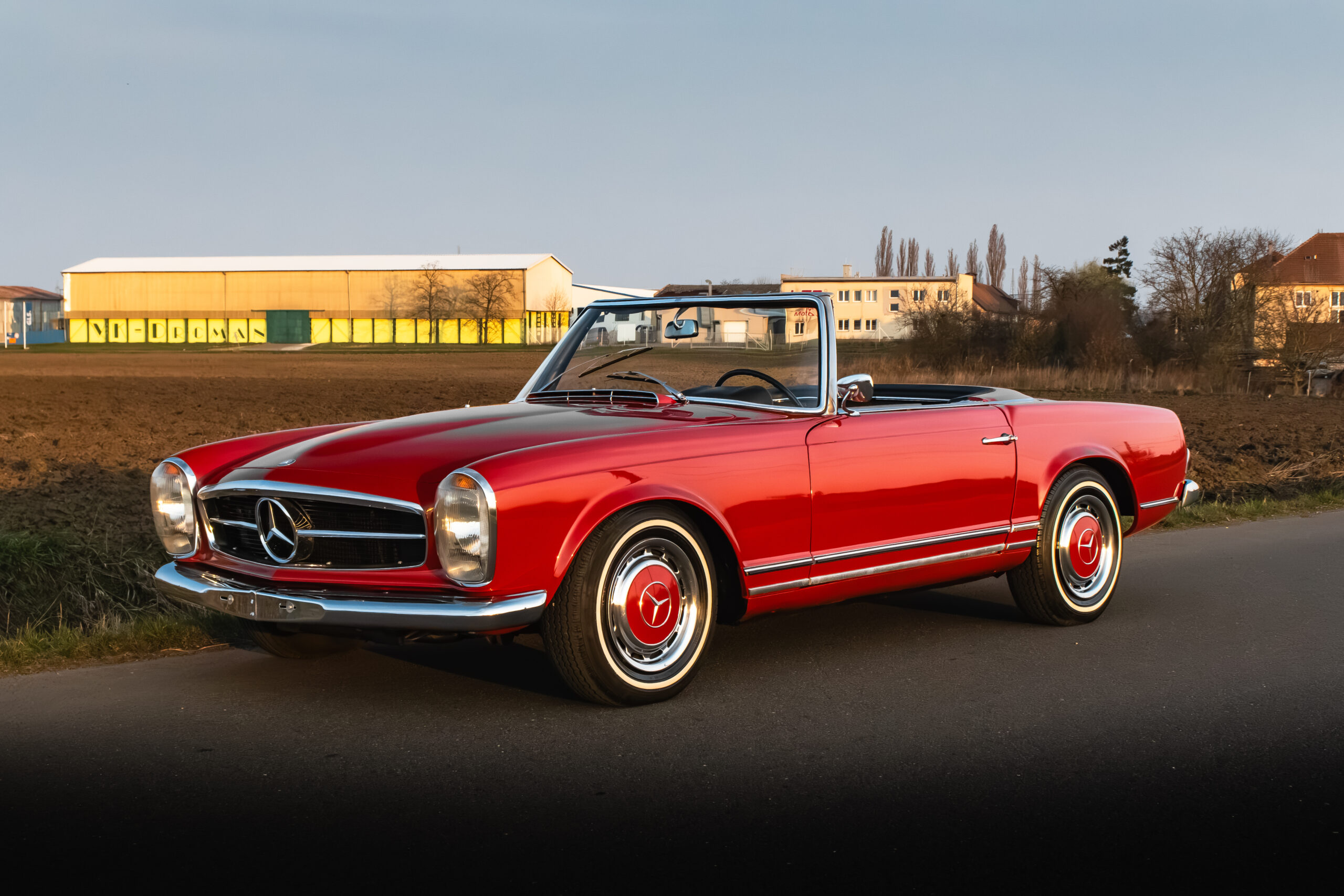
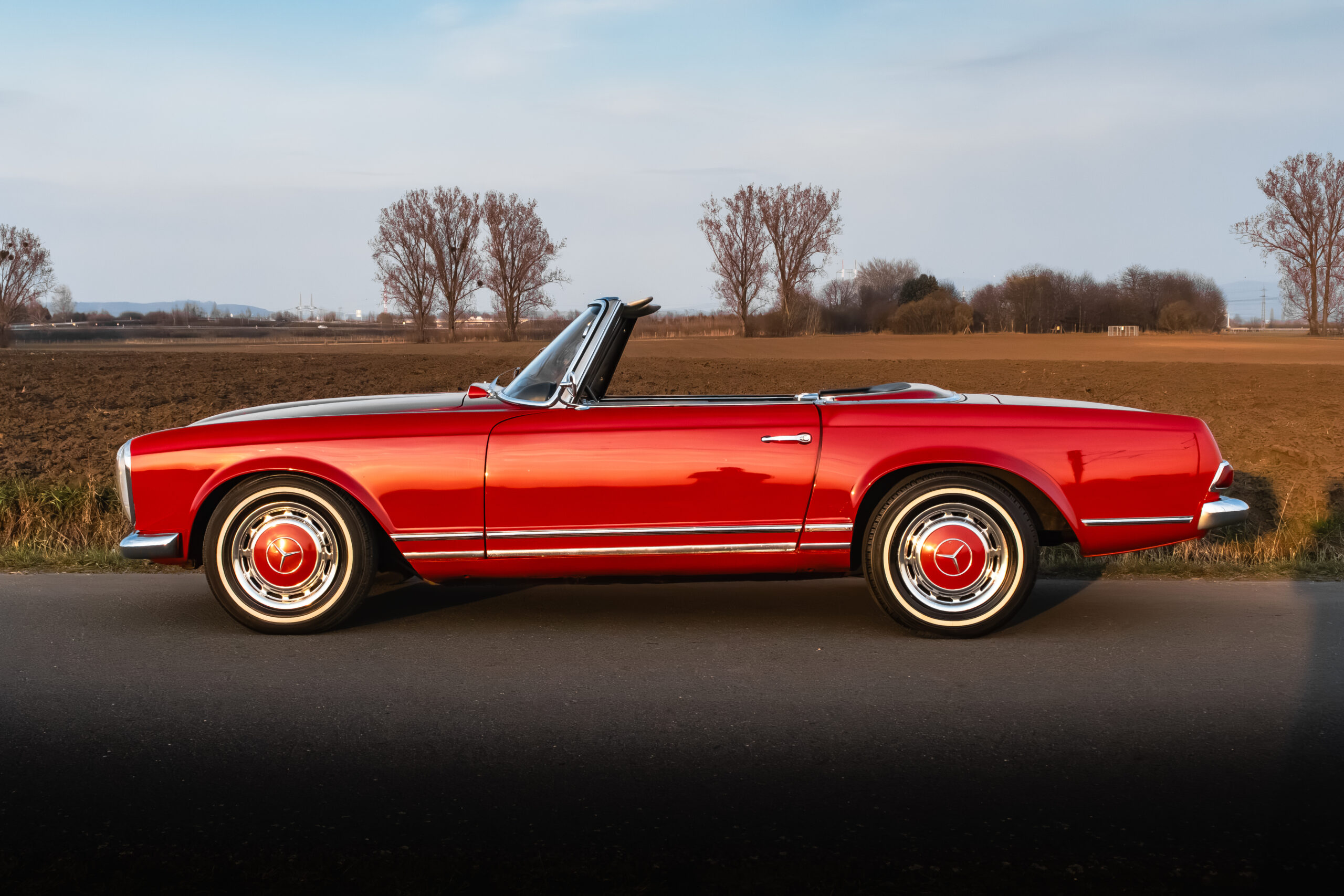
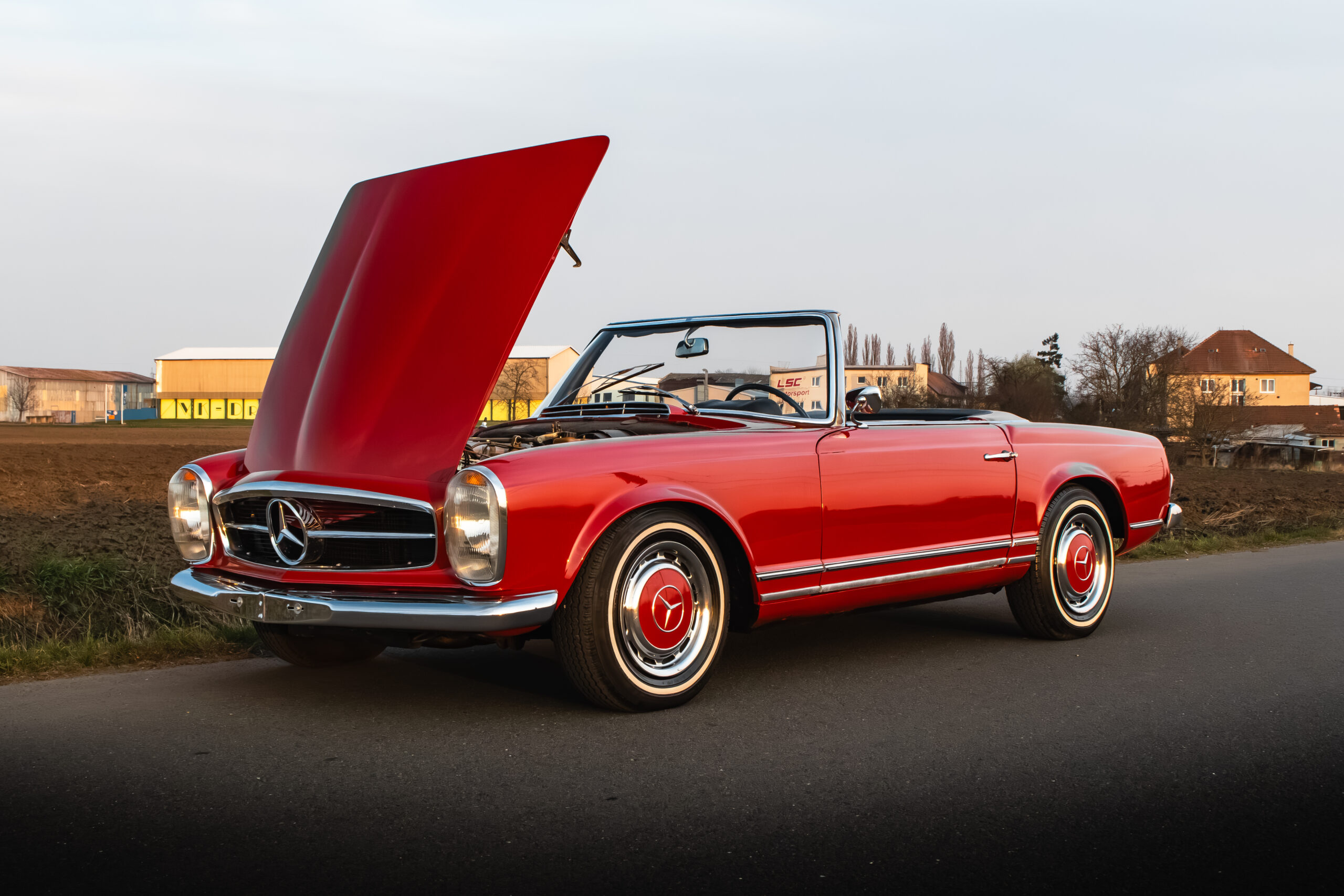
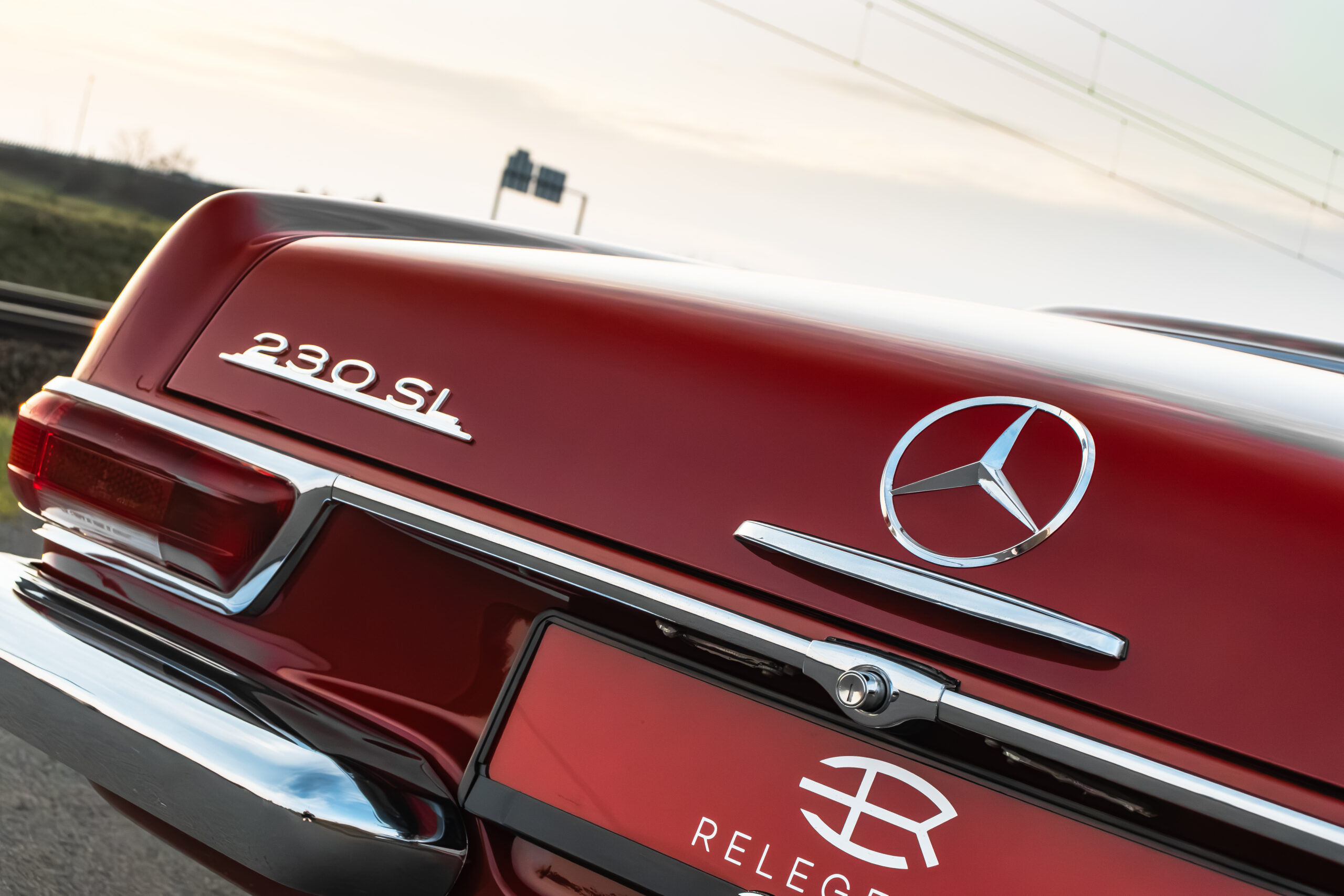
- European-specification car – originally supplied in Belgium
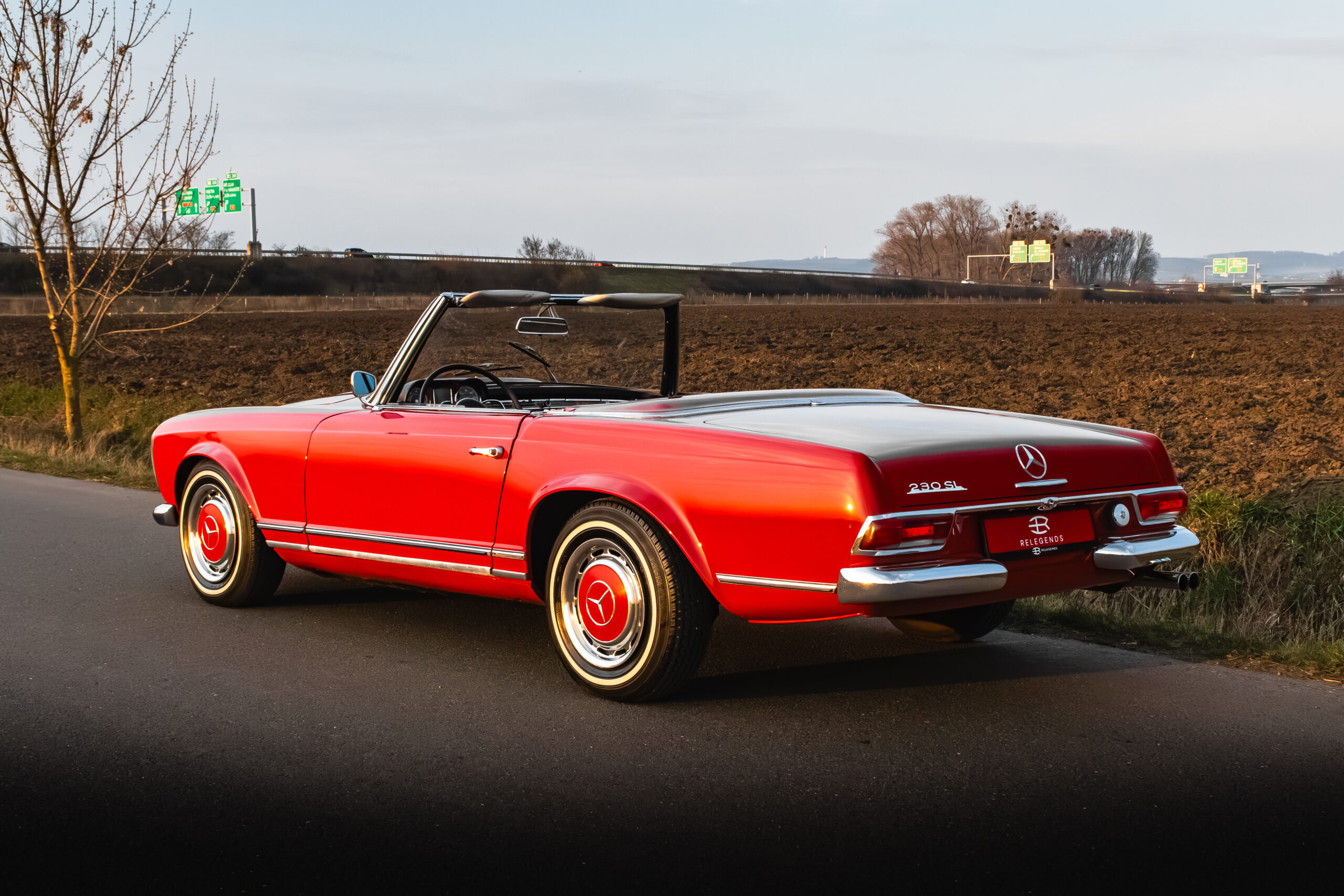
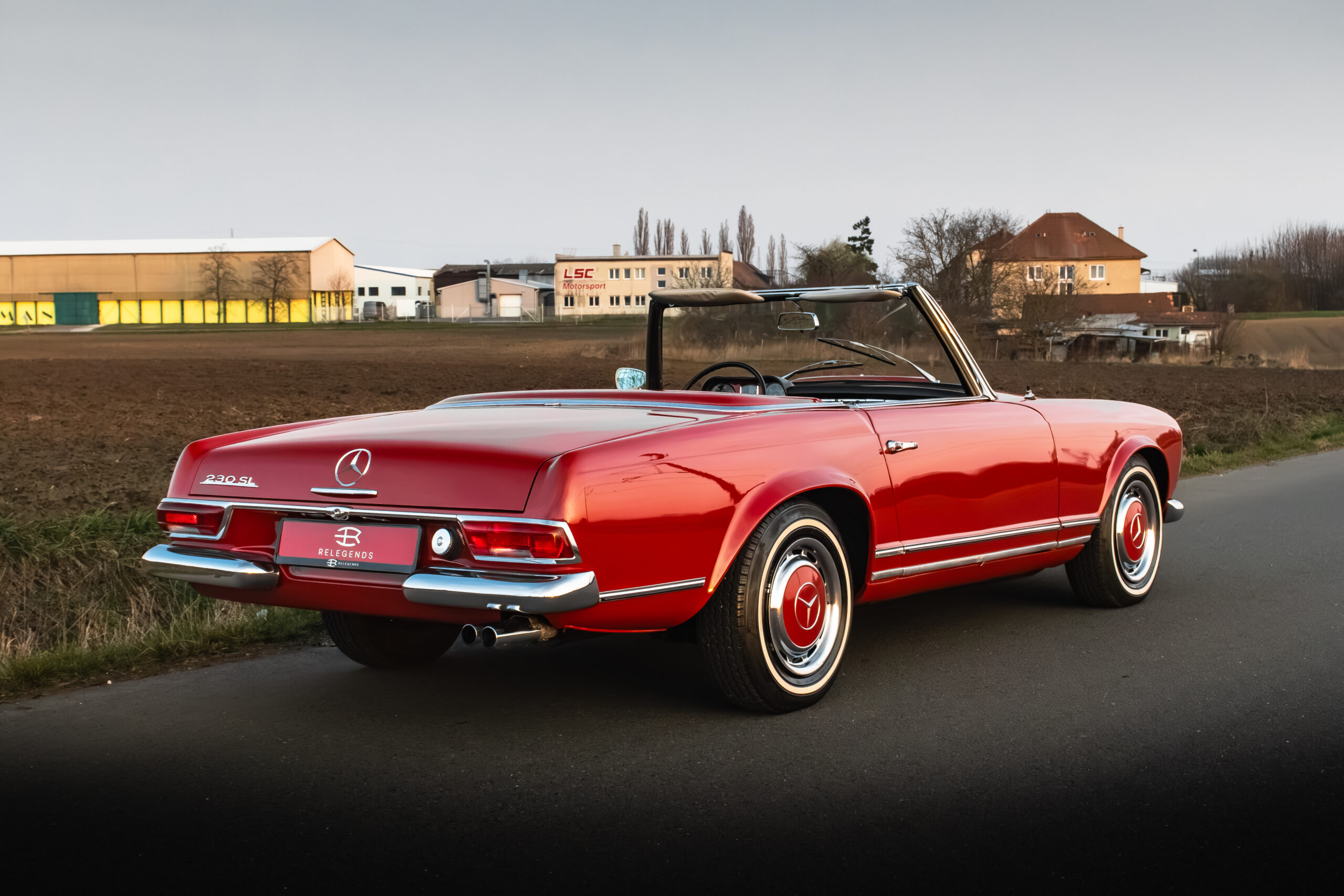
- Older restoration
- Eligible for standard Czech registration plates
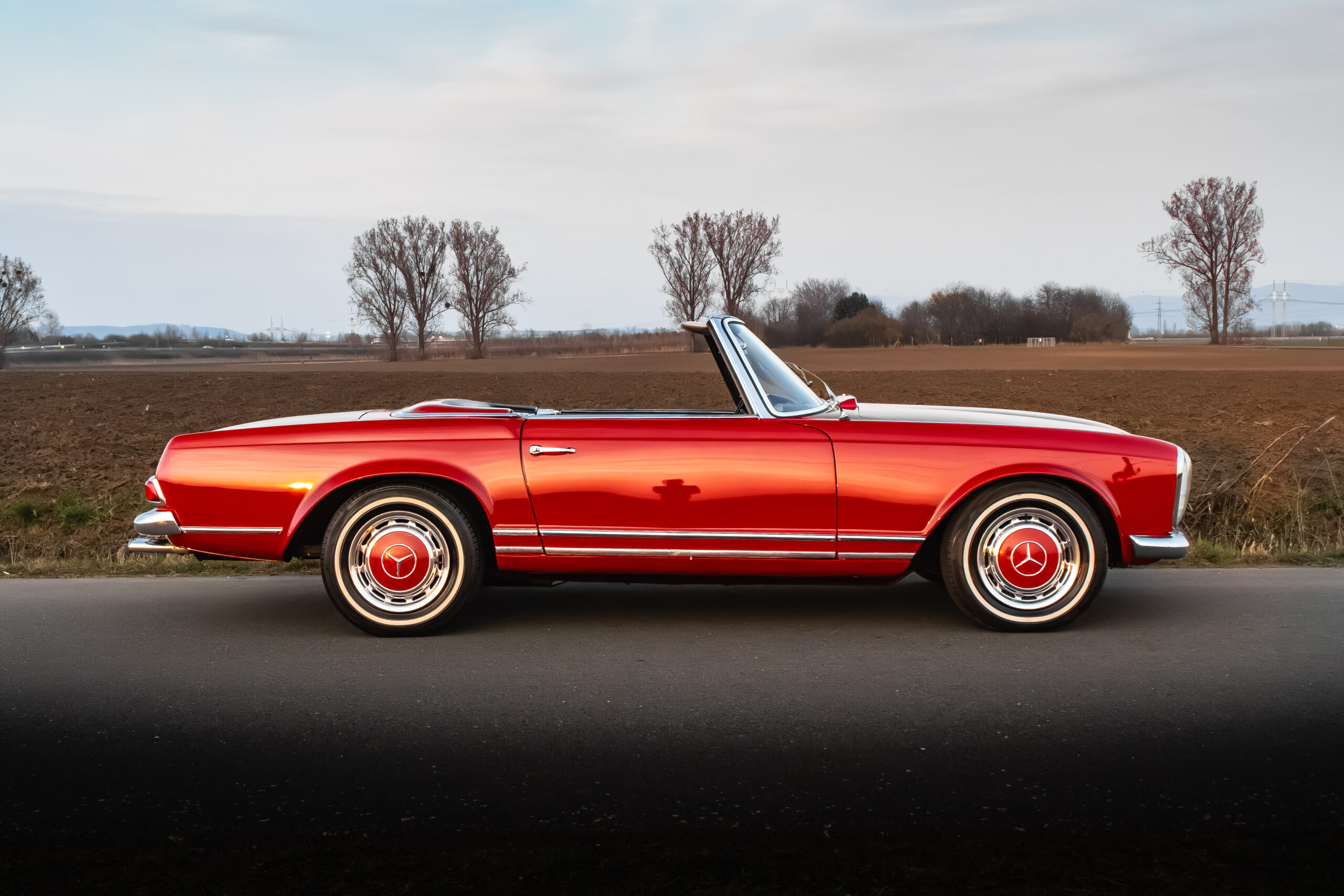
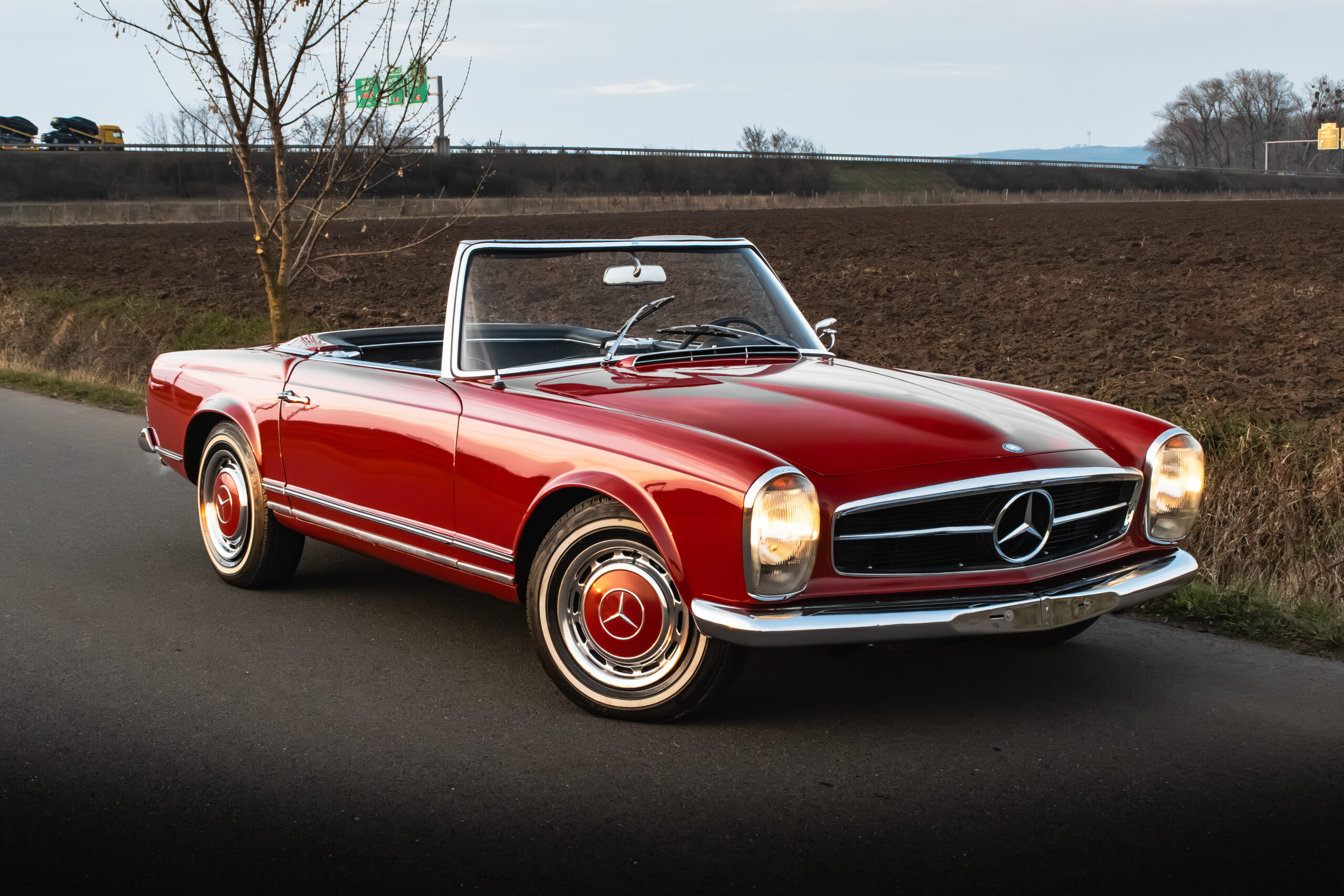
- Signal Red paintwork
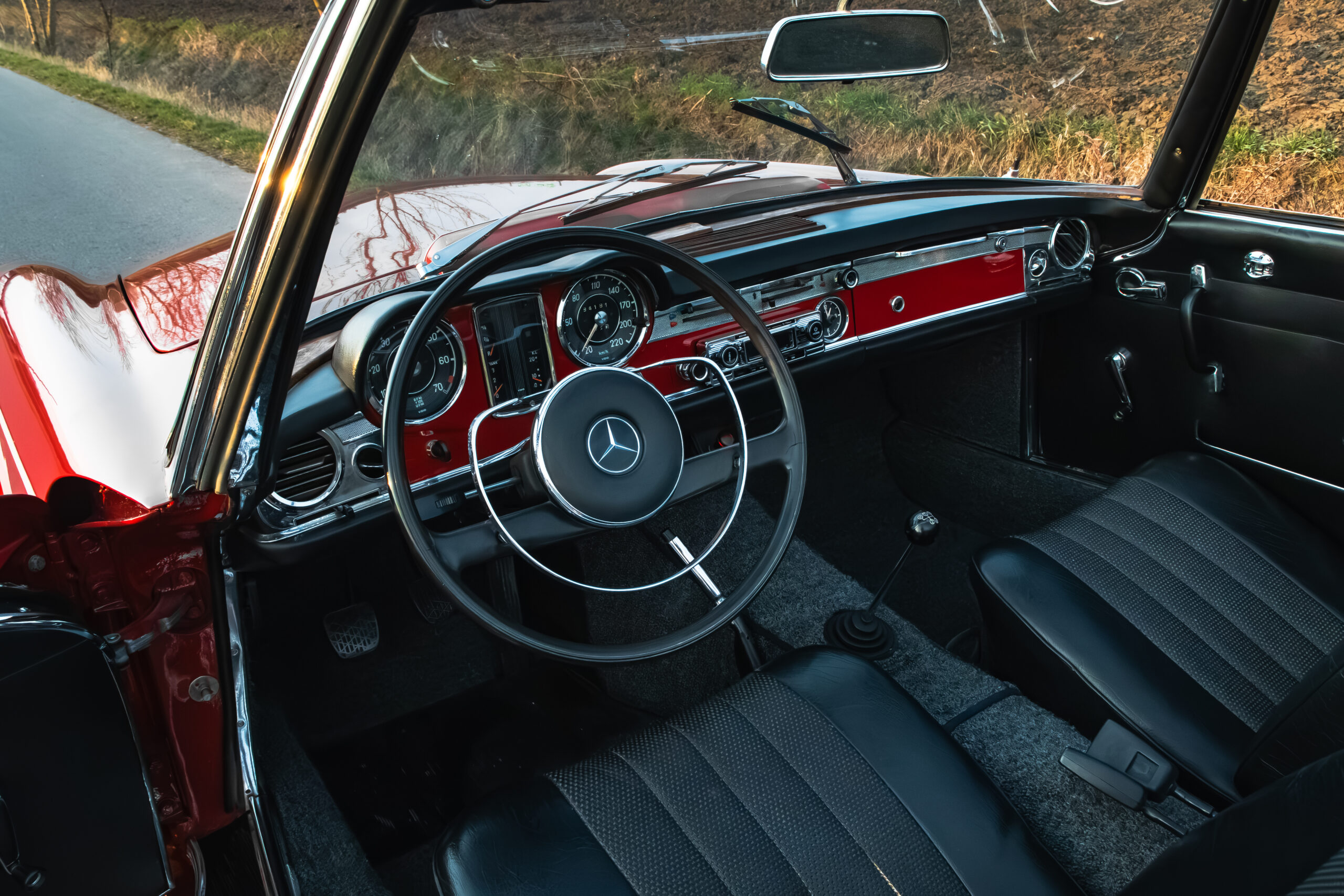
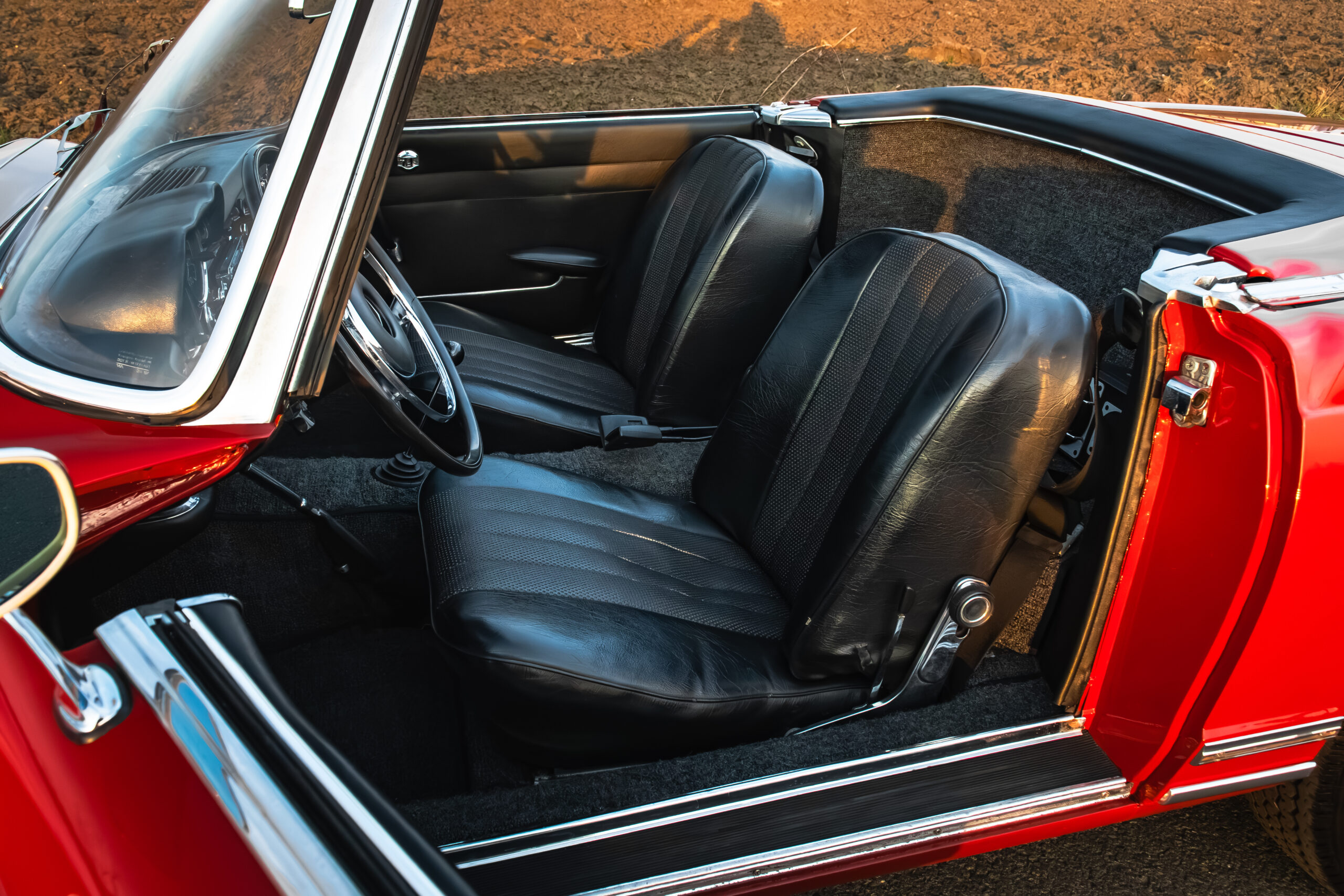
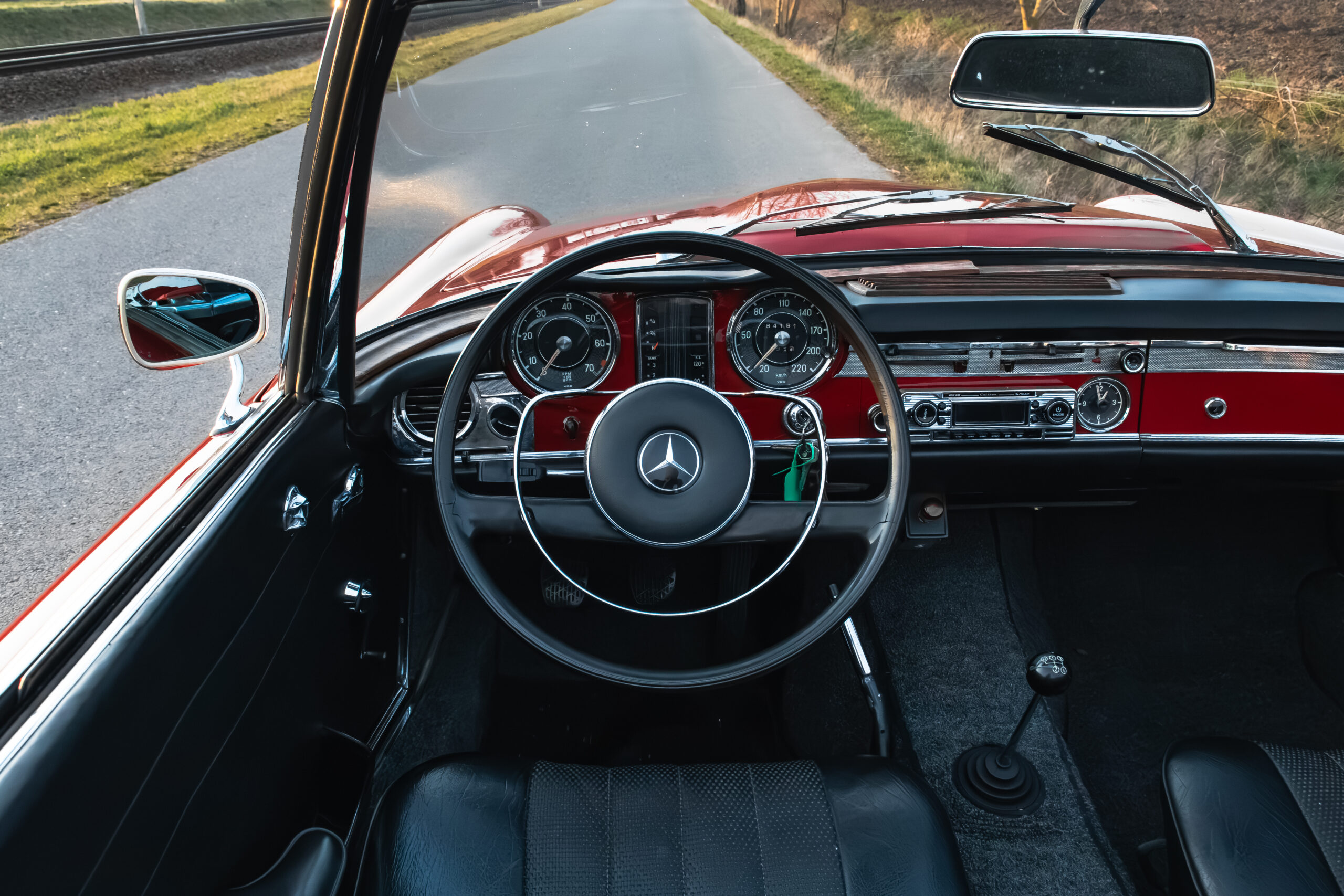
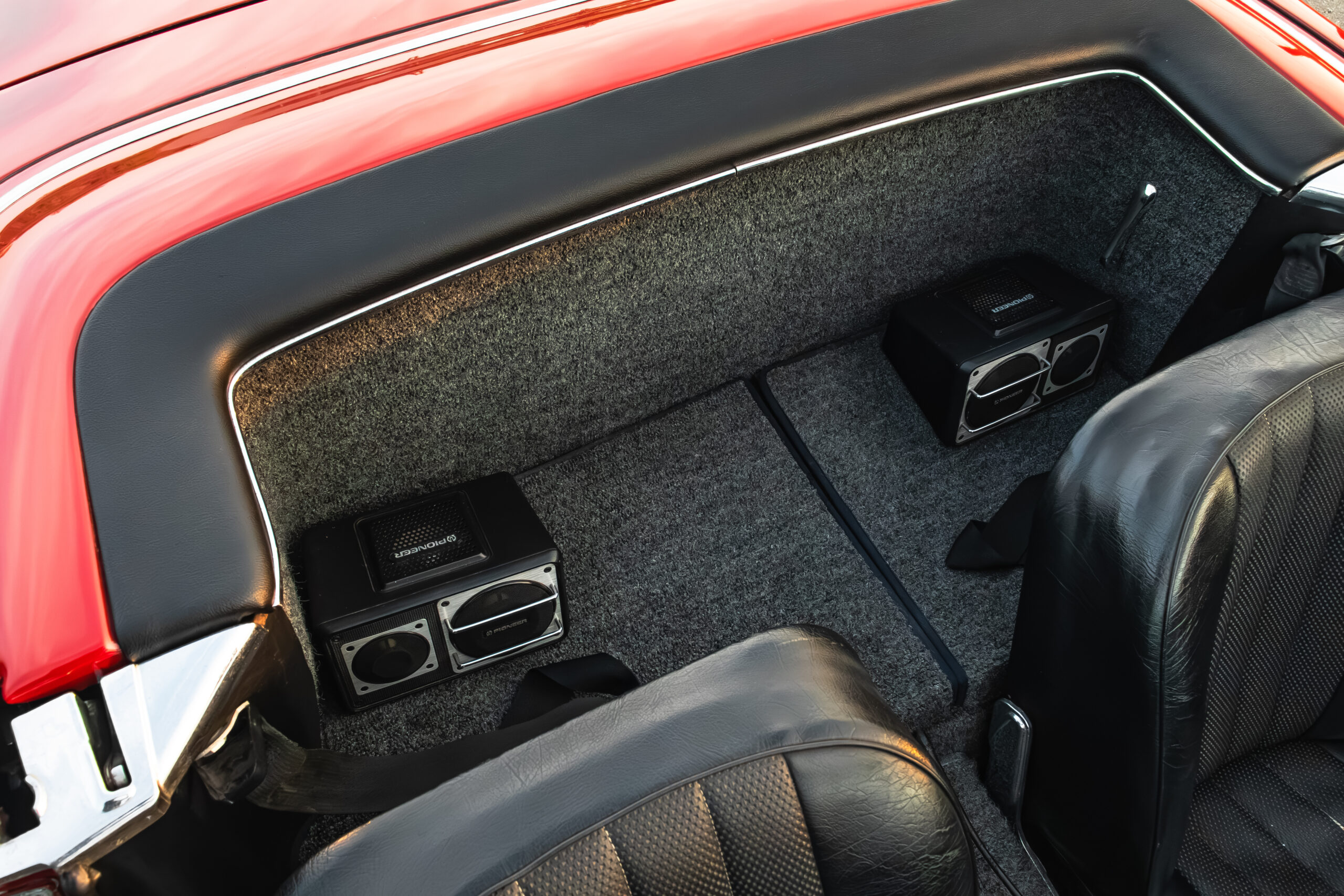
- Black leather interior
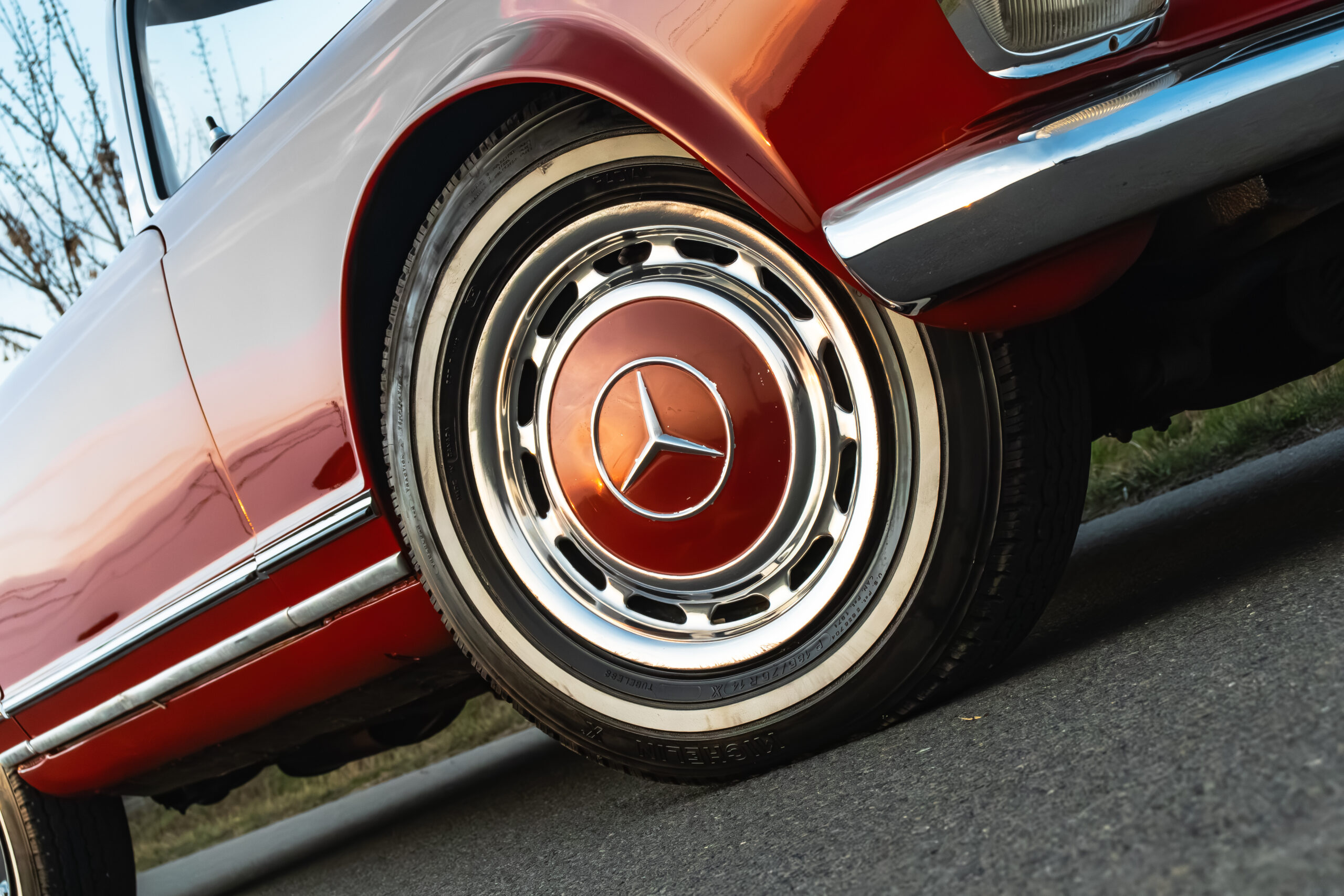
- Original 14-inch wheels
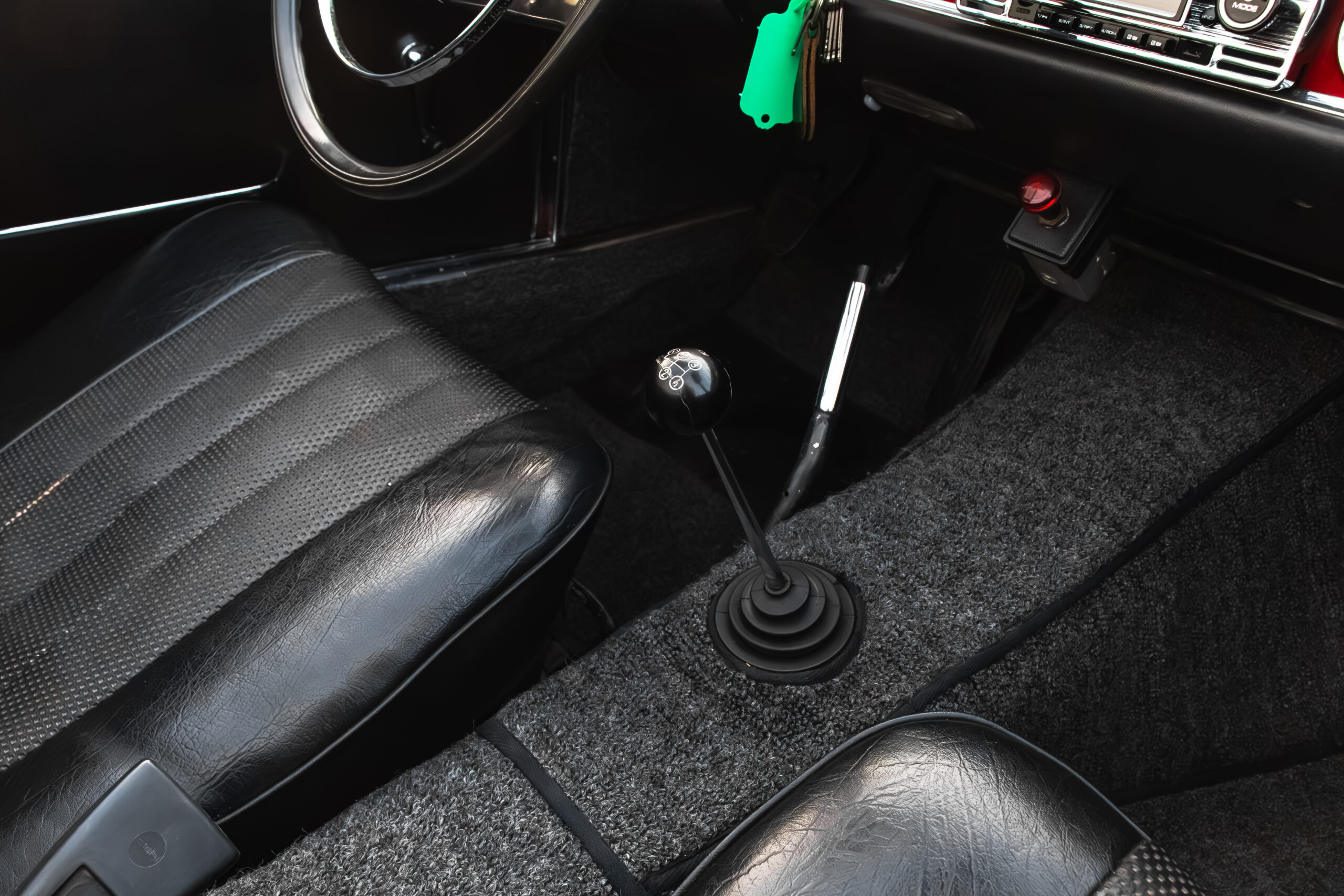
- 4-speed manual transmission
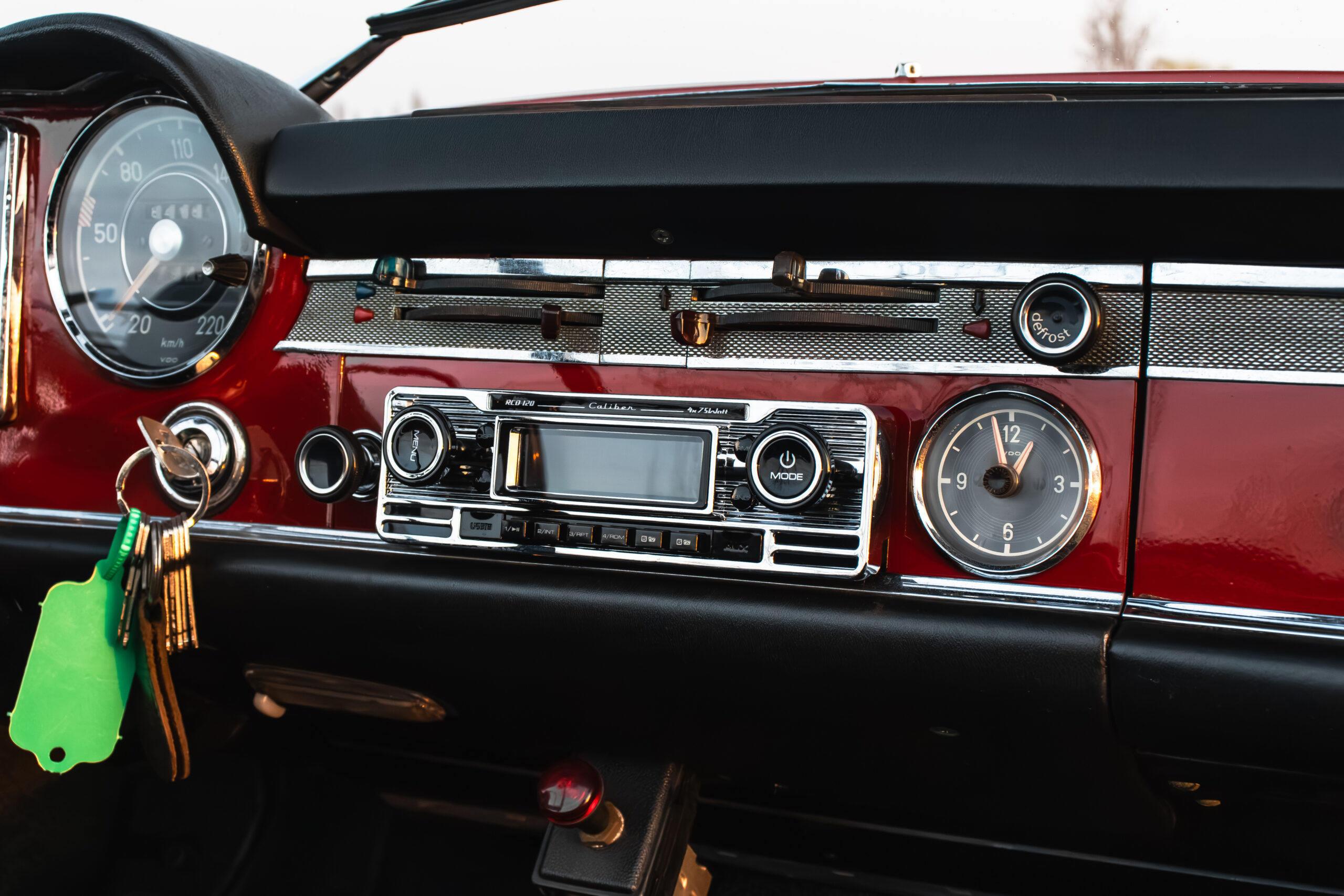
- Radio
Fill in the form and we will get back to you as soon as possible.
The Mercedes-Benz 230 SL W113 made its debut at the Geneva Motor Show in March 1963, replacing both the 190 SL and the legendary 300 SL Roadster. It combined elegance, safety and sporting ability in a way that was highly unusual at the beginning of the 1960s. Its distinctive concave hardtop quickly earned it the nickname “Pagoda”, a name by which the W113 remains known around the world today. The 1966 model year comes from the final phase of 230 SL production before the arrival of the 250 SL in 1967.
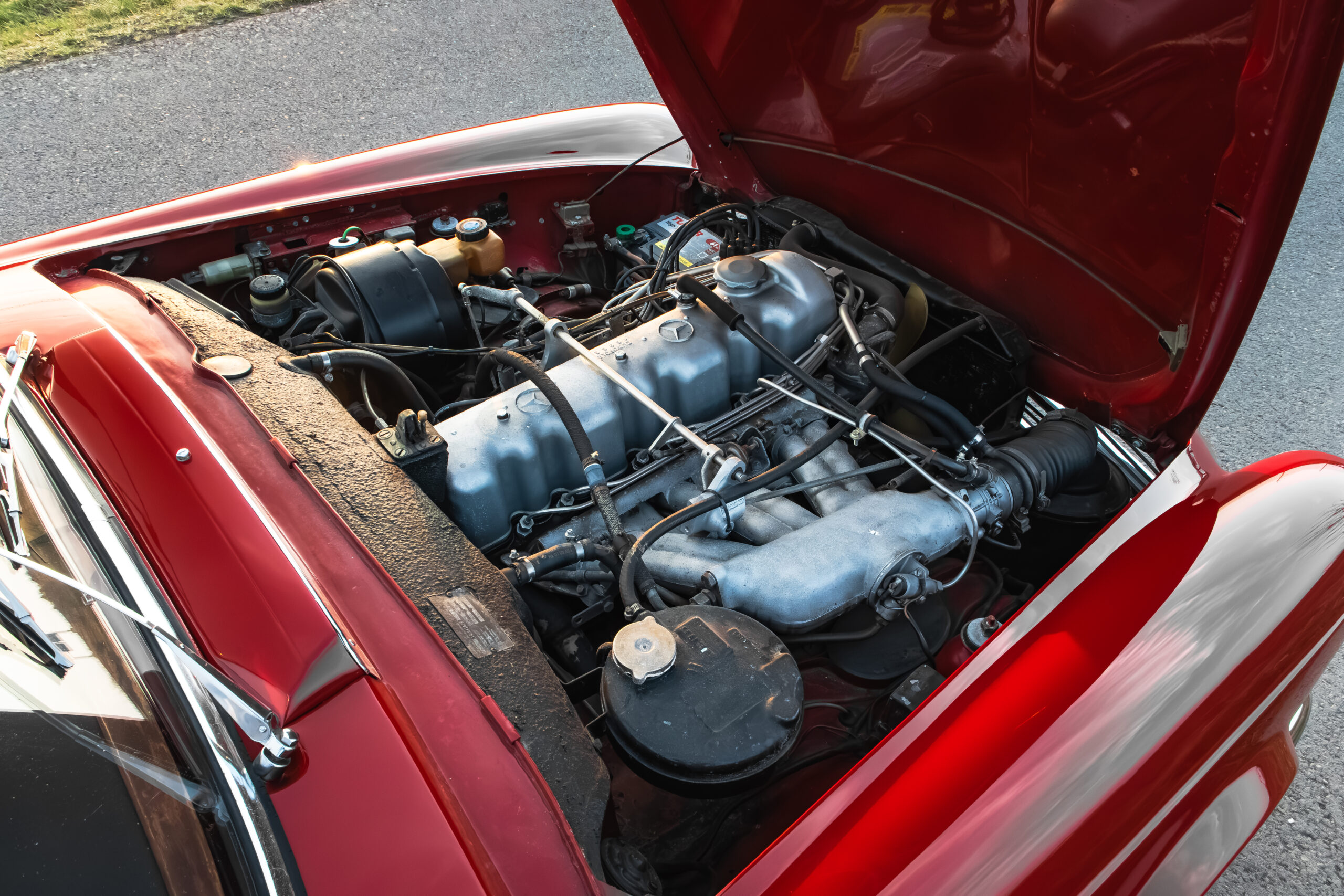
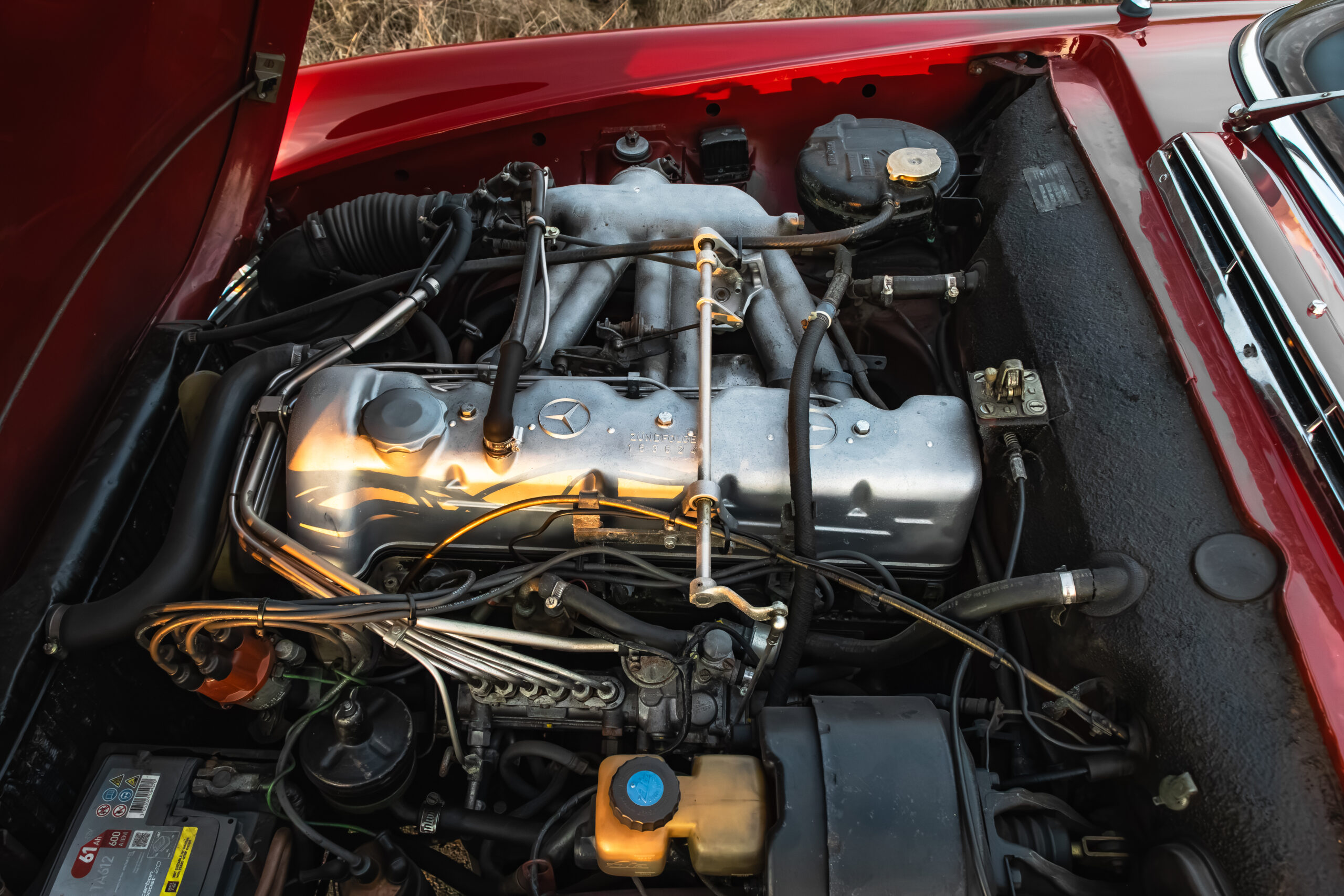
Under the long bonnet sits the naturally aspirated 2.3-litre M127 II straight-six, equipped with Bosch mechanical multi-point fuel injection. It produces 150 PS at 5,500 rpm and 196 Nm of torque at 4,200 rpm.
Power is sent to the rear wheels through a four-speed manual gearbox, although a four-speed automatic and the considerably rarer ZF five-speed manual were also available. The 230 SL accelerates from 0–100 km/h in around 11 seconds and is capable of approximately 200 km/h.
One of the most important technical aspects of the W113 was its emphasis on safety. The car incorporated Béla Barényi’s pioneering safety-body concept, with defined crumple zones at the front and rear surrounding a rigid passenger cell. Mercedes-Benz describes the W113 as the first sports car to feature this type of safety body, making it an important milestone in the development of automotive safety.
Independent suspension and front disc brakes give the 230 SL composed and predictable road manners. Rather than being an uncompromising sports car, the Pagoda was conceived as a sophisticated two-seat roadster capable of combining confident performance with the comfort required for long-distance touring.
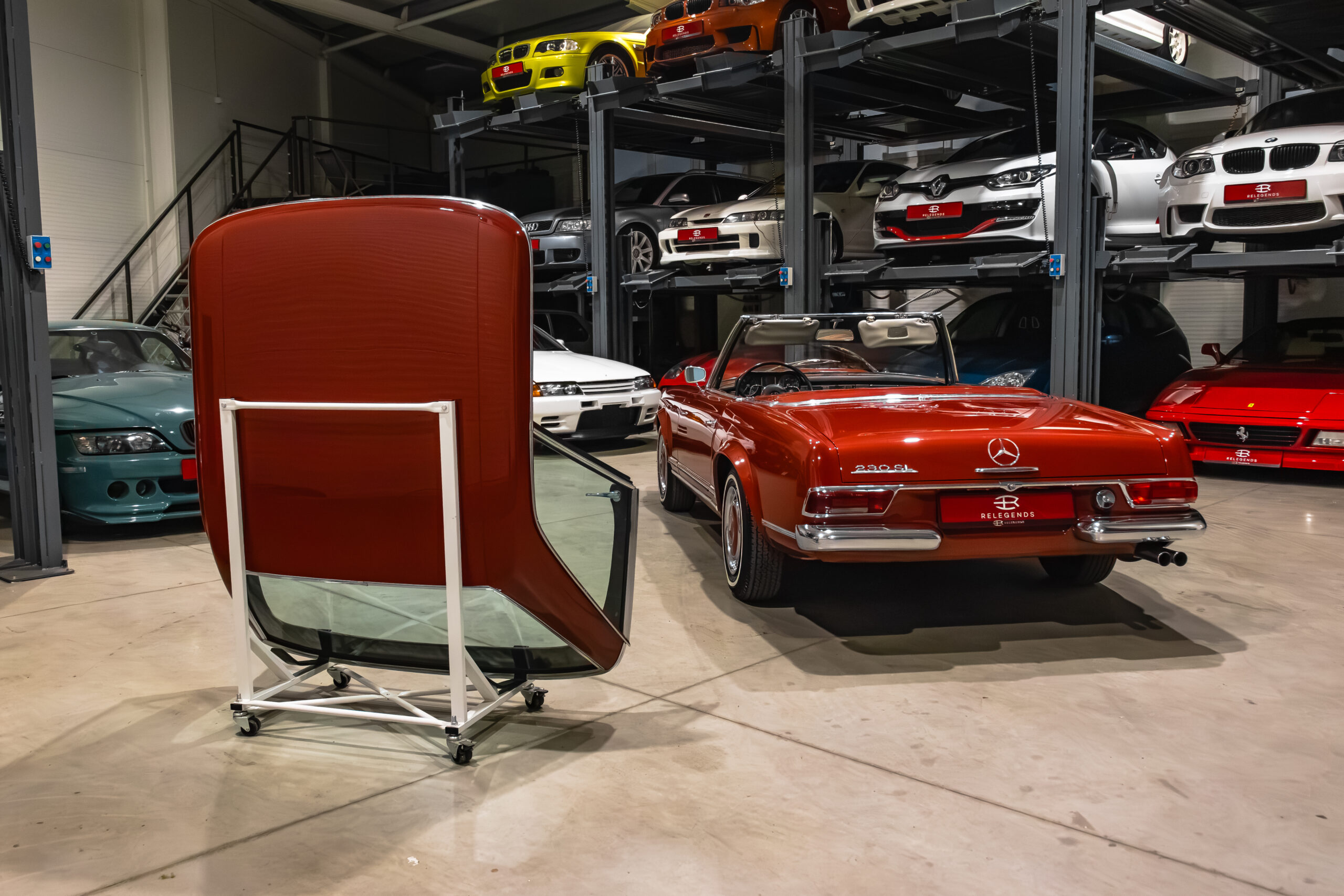
The design of the W113 remains one of the most recognisable in Mercedes-Benz history. Its long bonnet, compact rear proportions and clean body lines are complemented by the distinctive removable hardtop, whose inward-curving profile recalls the roofs of Asian temples – the feature that inspired the Pagoda nickname.
Chrome bumpers, the prominent Mercedes-Benz grille and restrained detailing give the car an elegance that has aged remarkably well. With the hardtop removed, the W113 becomes a classic open roadster, while the optional roof gives it the refinement and appearance of a coupé.
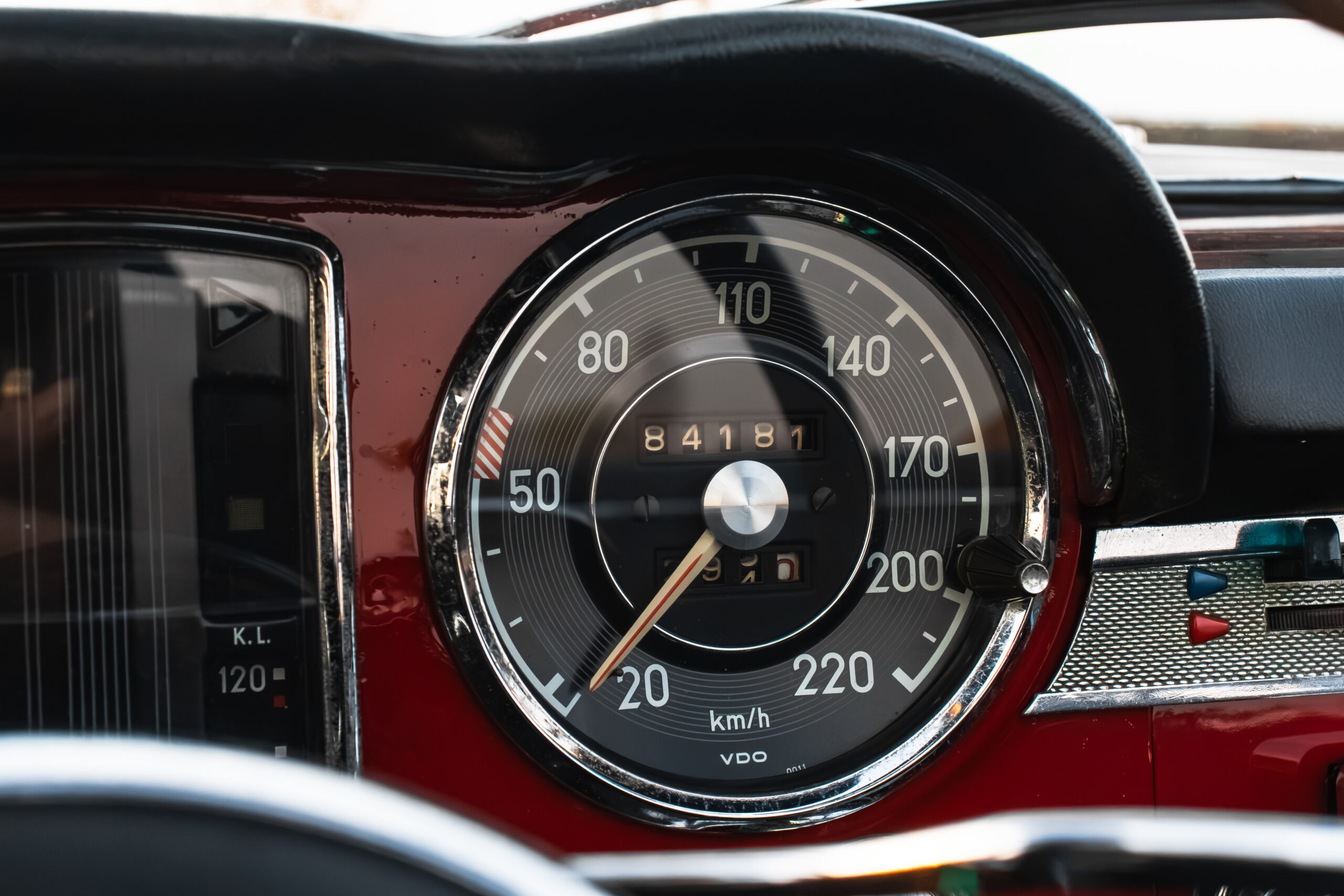
Inside, the 230 SL follows the same philosophy of understated luxury. A thin-rimmed steering wheel, large analogue instruments and high-quality materials create a cabin that is simple, elegant and unmistakably of its era.
The W113 was never intended to be an outright competition car. Instead, it offered a carefully judged blend of comfort, performance and refinement – qualities that helped establish the character of the SL for generations to come. Mercedes-Benz itself described the original 230 SL as neither a hard-edged roadster nor a soft boulevard cruiser, but a comfortable yet sporting two-seater.
A total of approximately 19,800 examples of the 230 SL were produced between 1963 and 1967 before it was succeeded by the 250 SL and later the 280 SL.
The 1966 Mercedes-Benz 230 SL W113 represents one of the defining European roadsters of the 1960s. Its elegant proportions, refined straight-six engine, pioneering safety engineering and unmistakable Pagoda hardtop have made it one of the most recognisable and desirable classic Mercedes-Benz models.
More than sixty years after its introduction, the W113 remains a particularly compelling combination of design, engineering and effortless grand-touring character.