


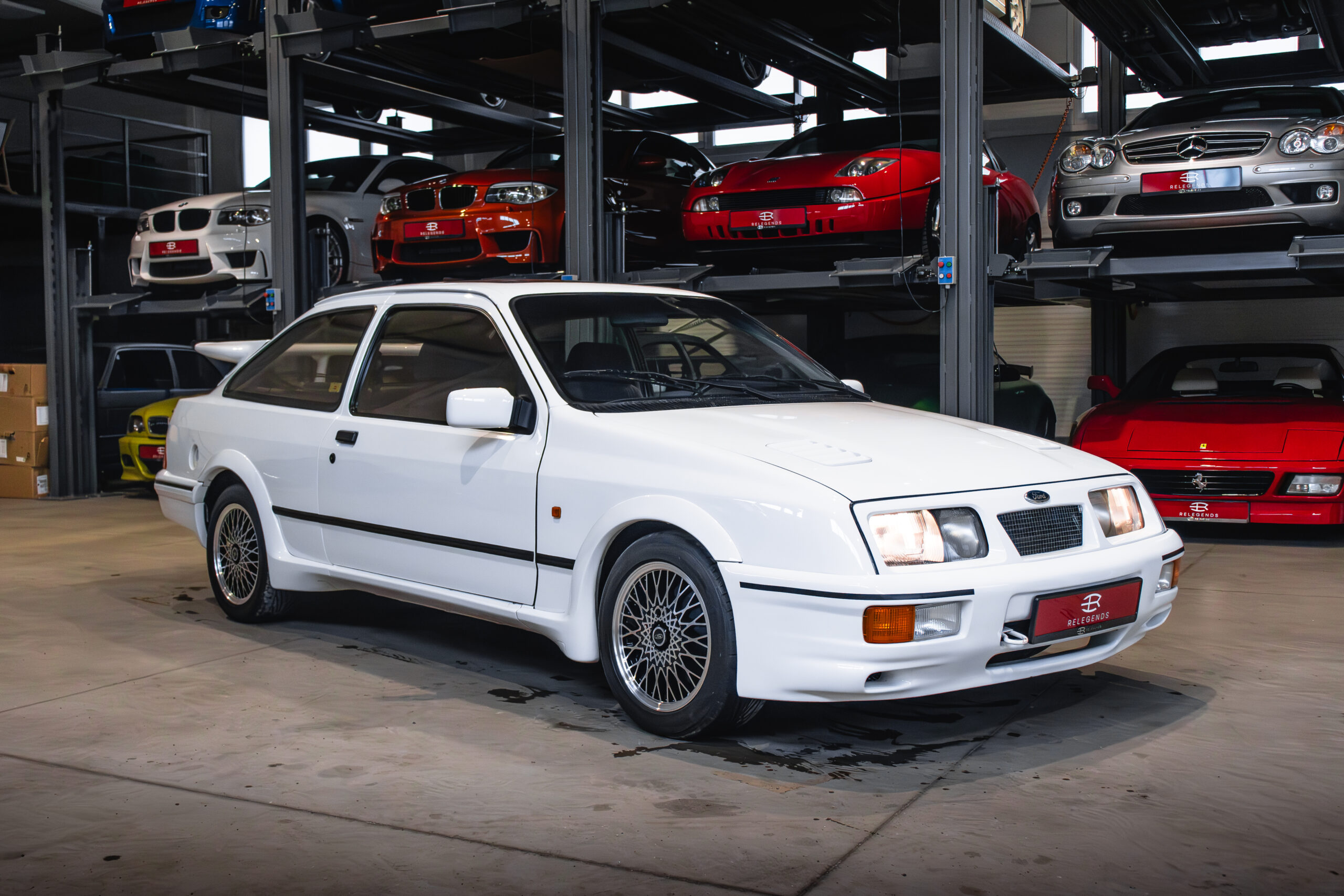
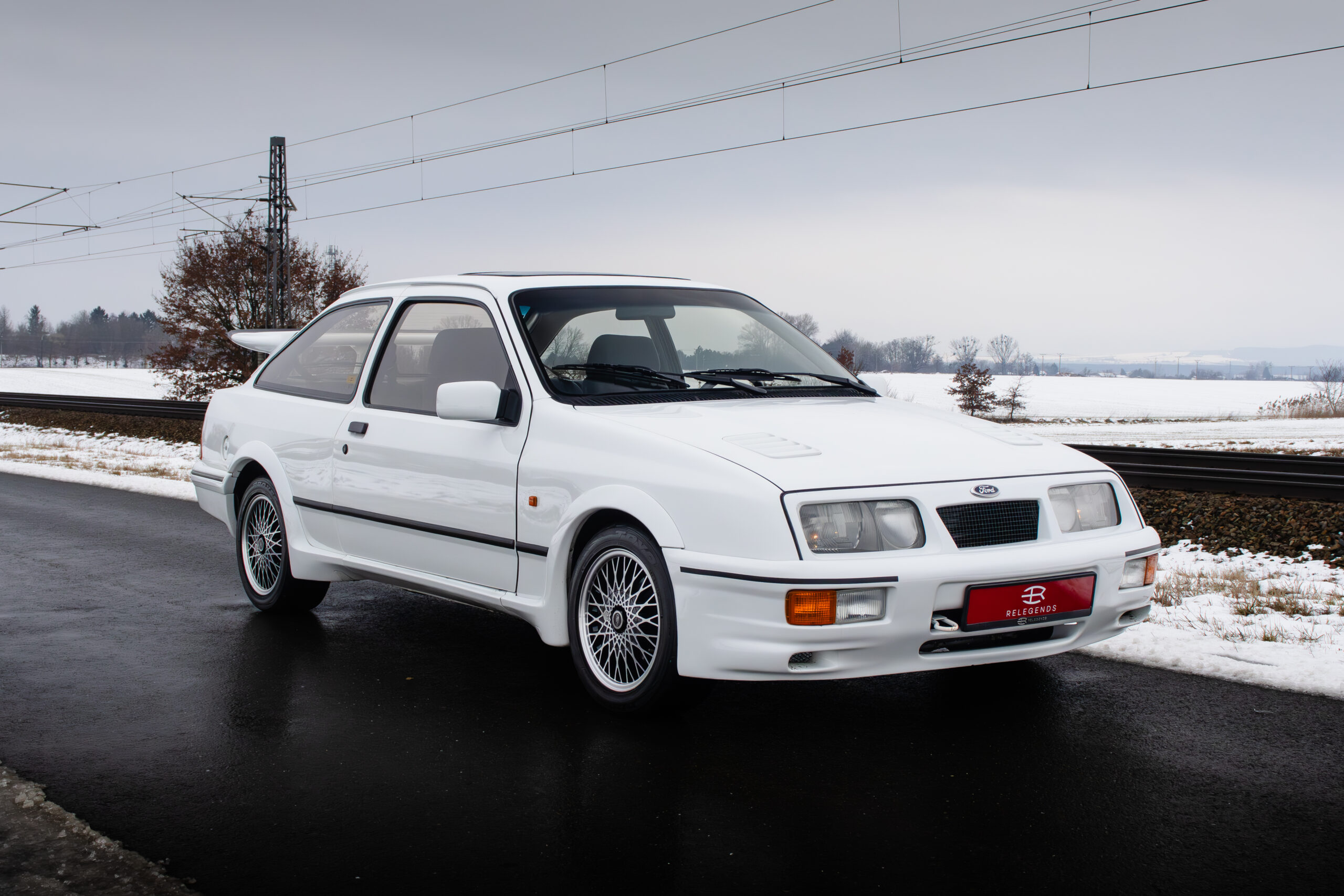
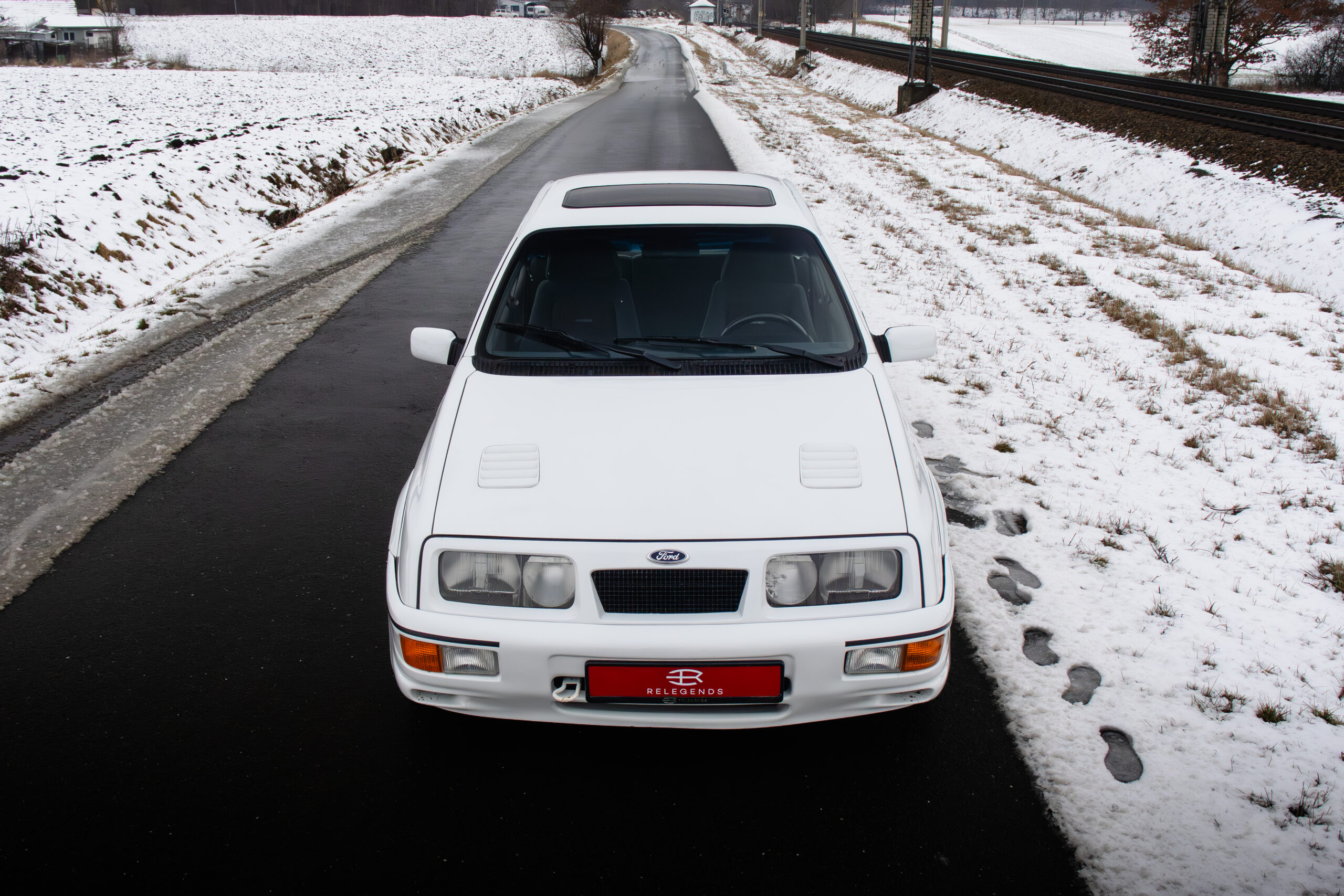
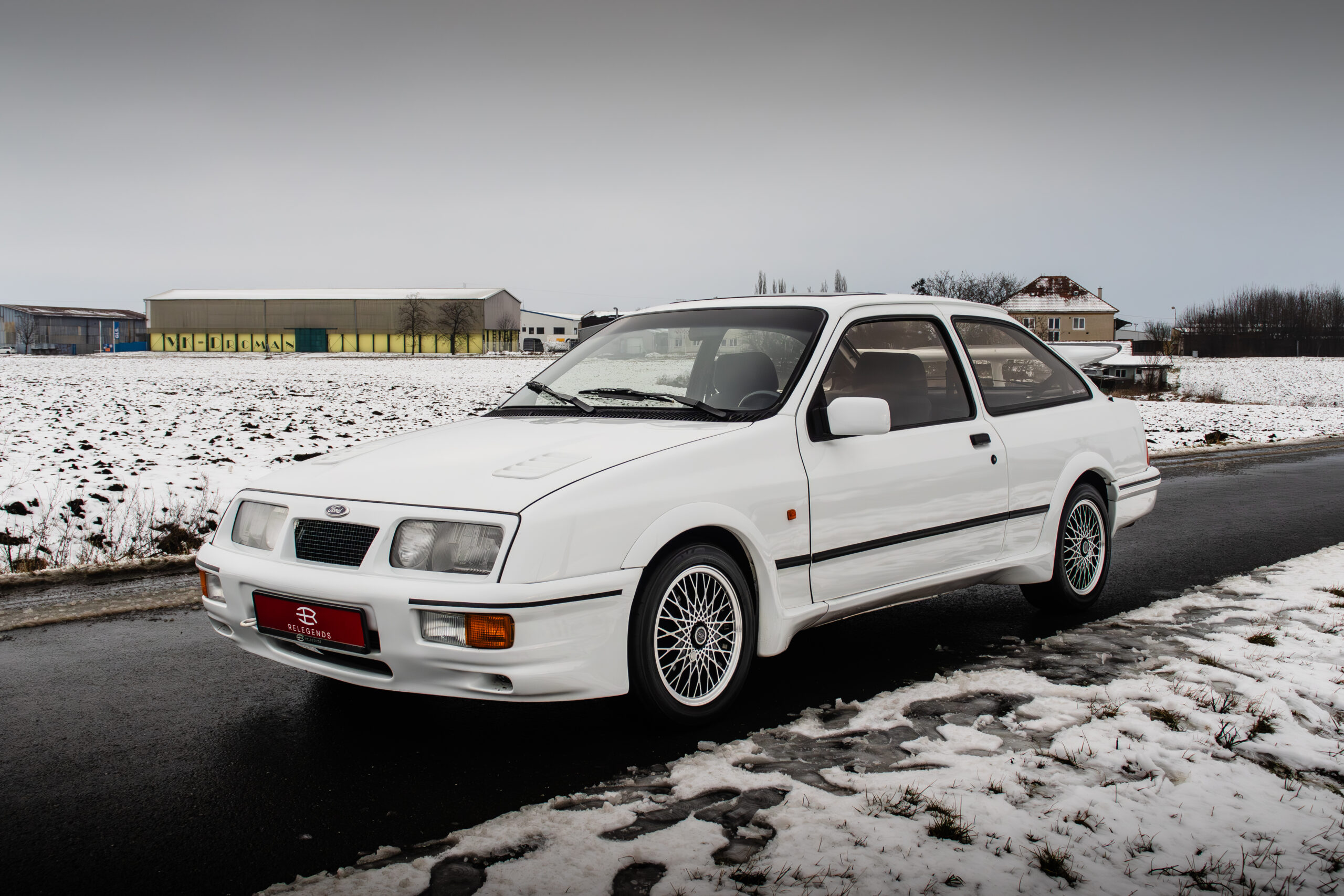
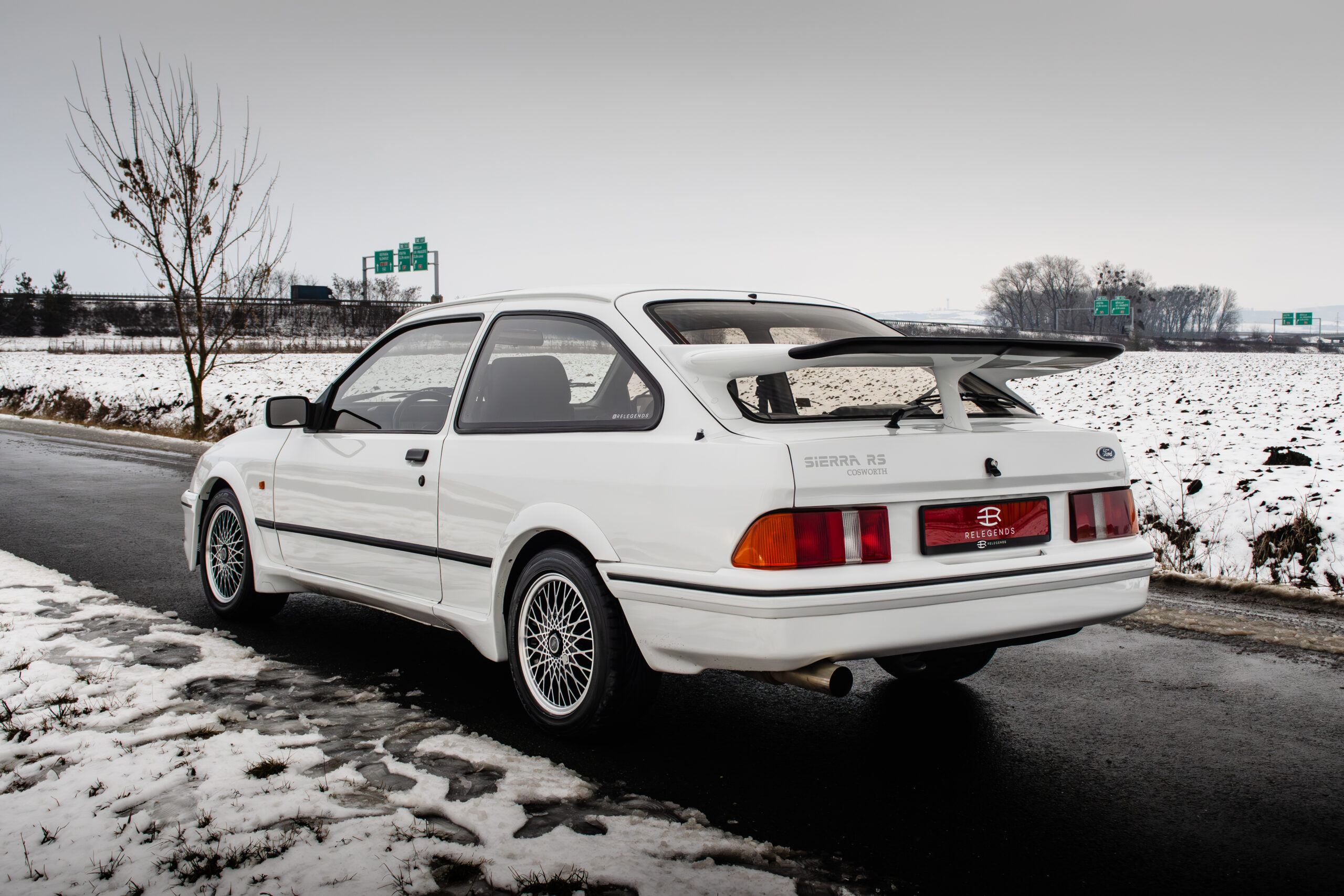
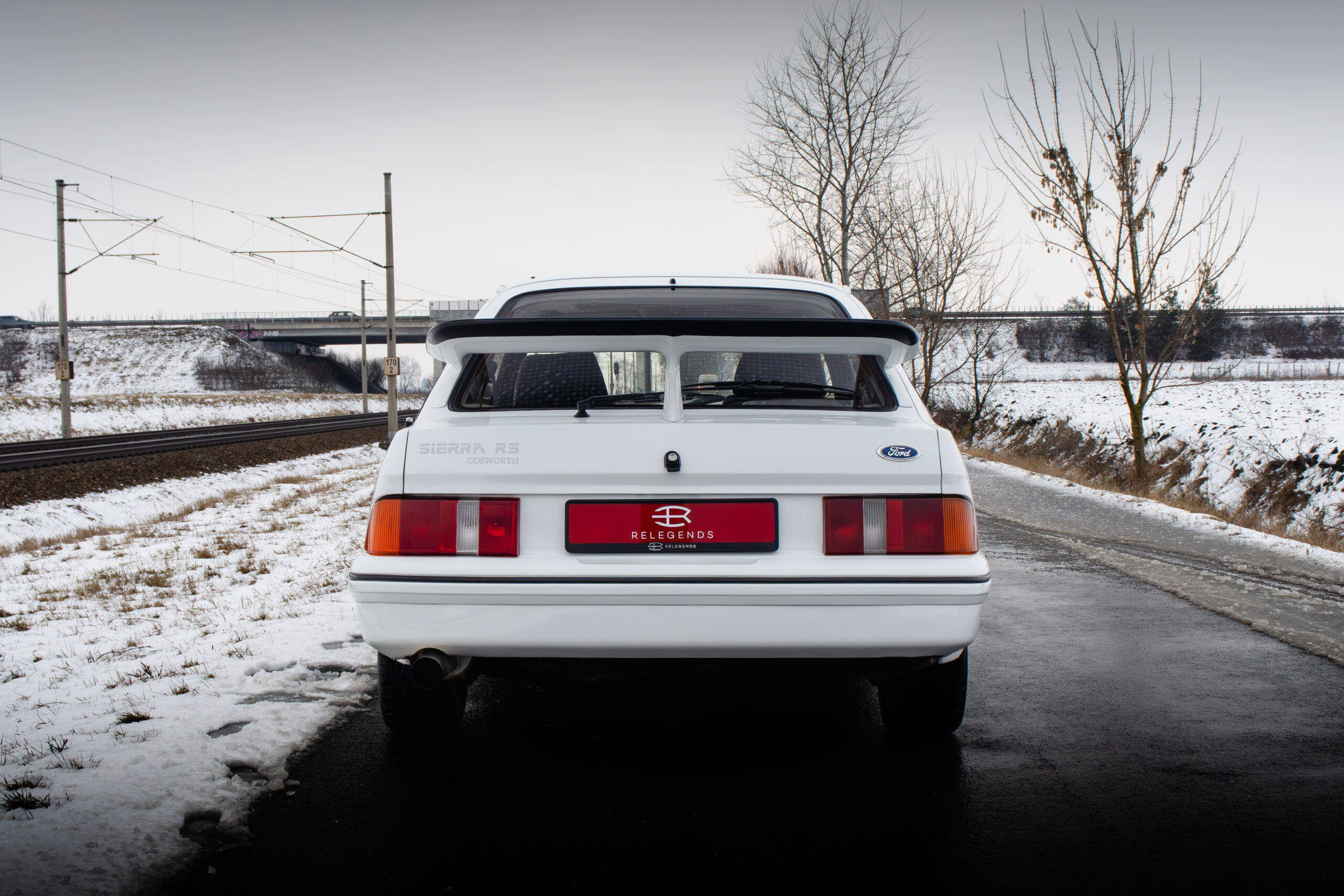
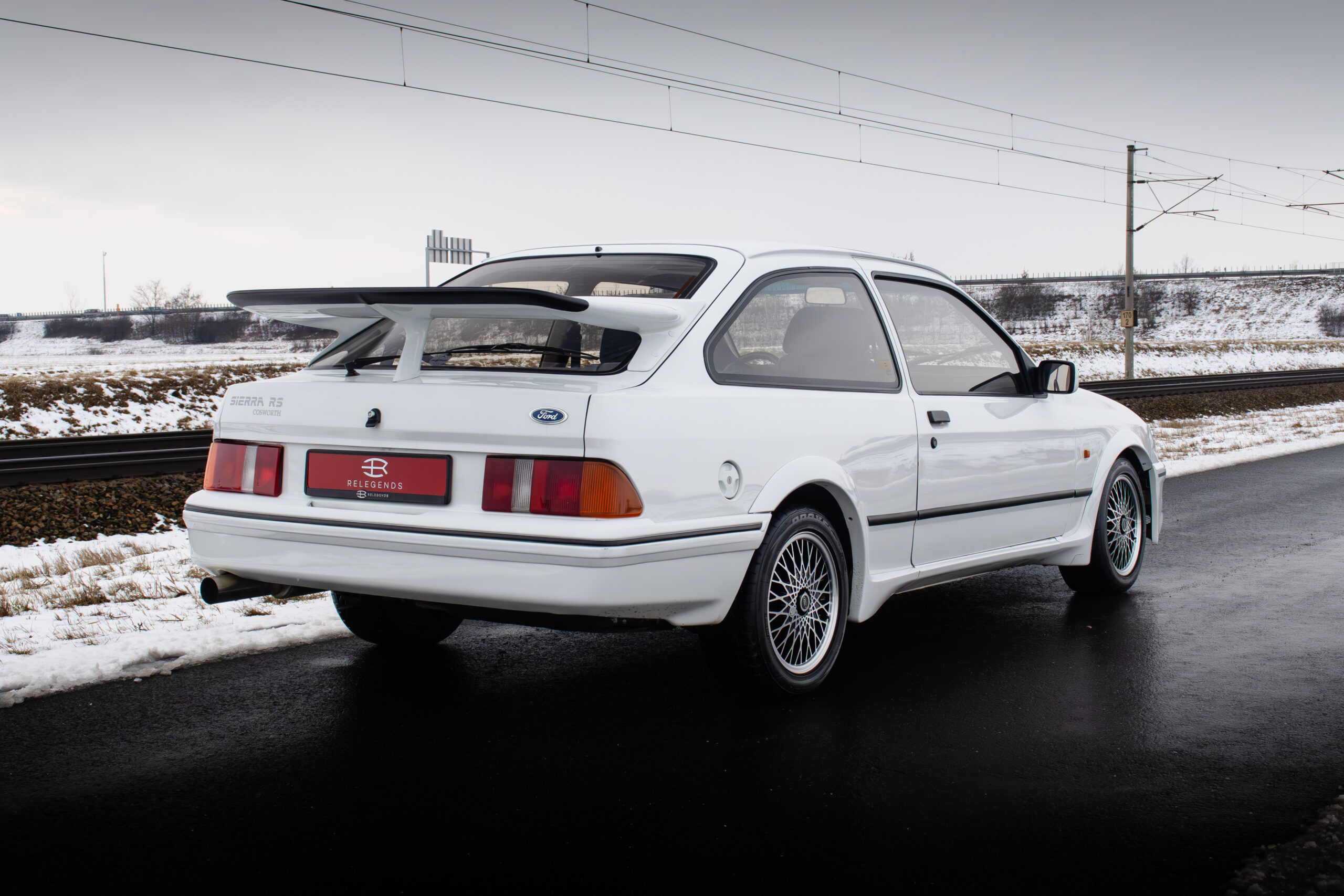
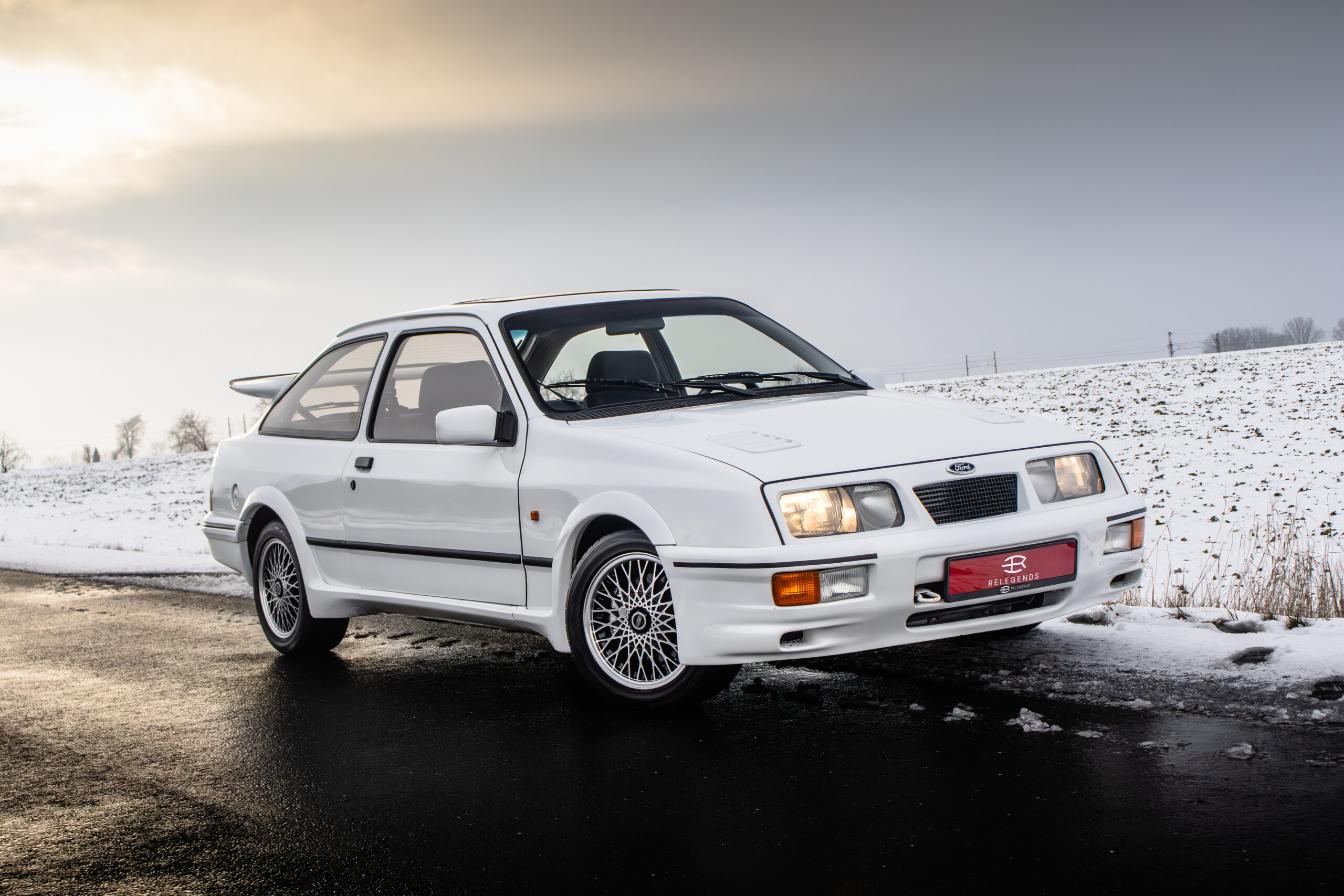
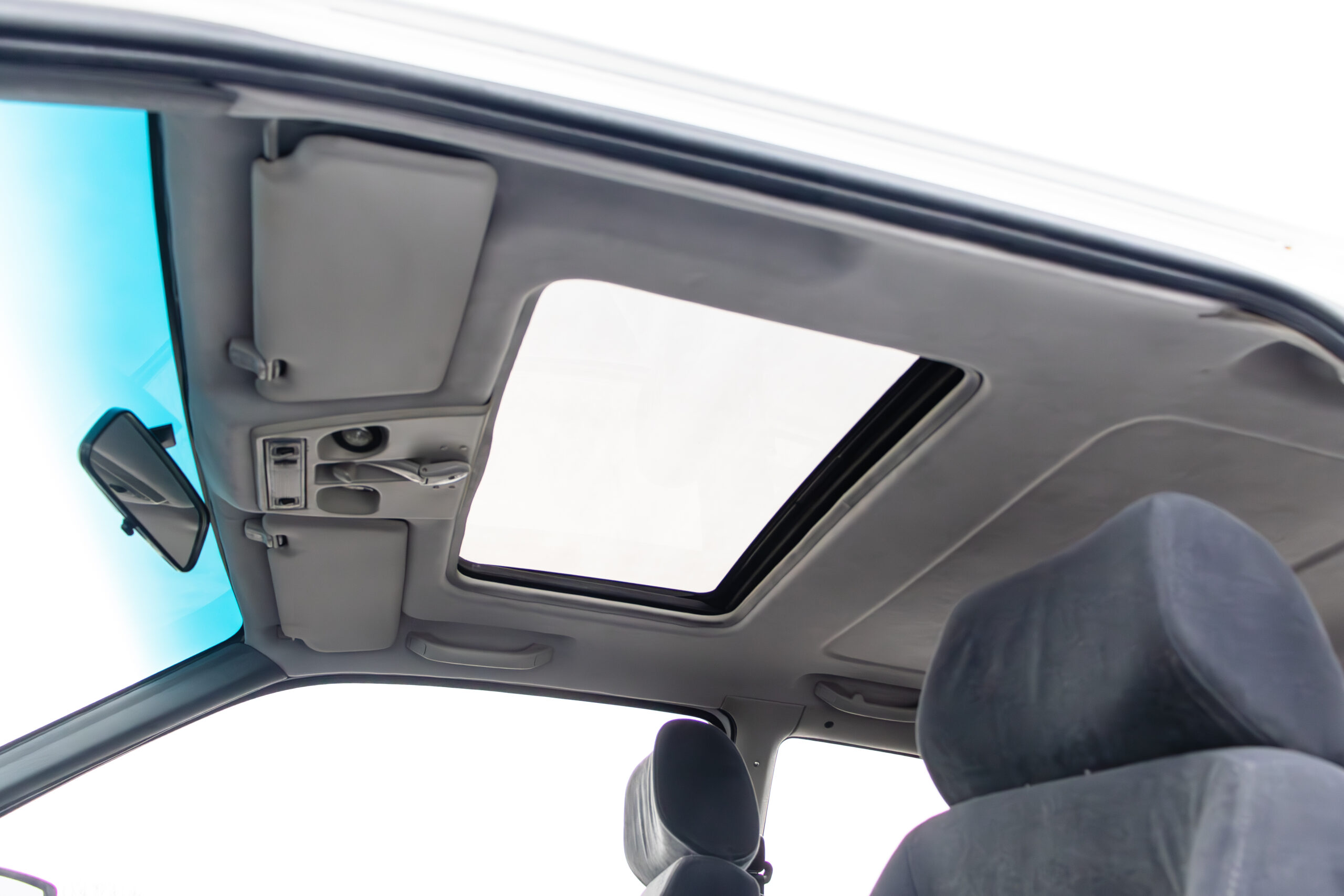
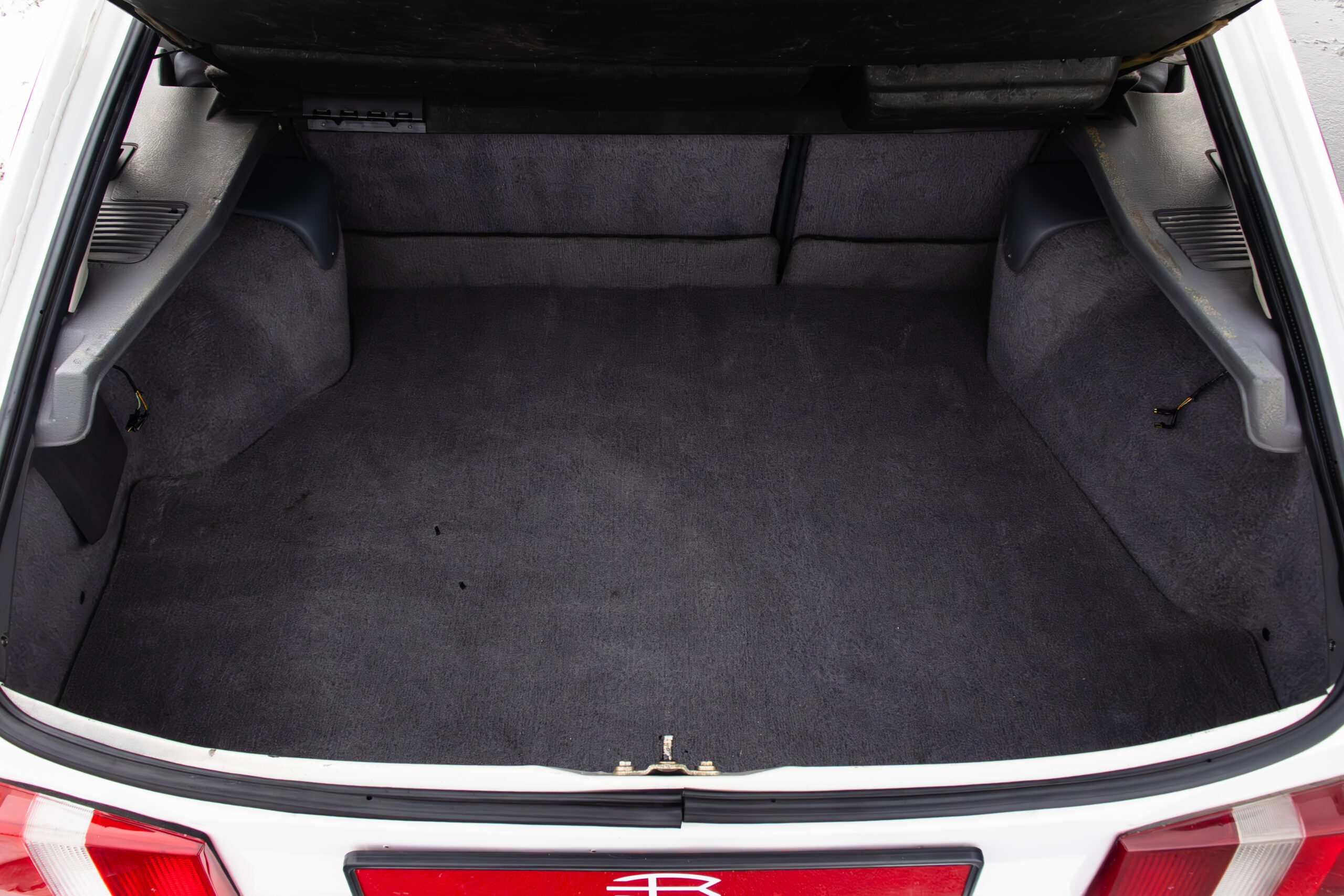
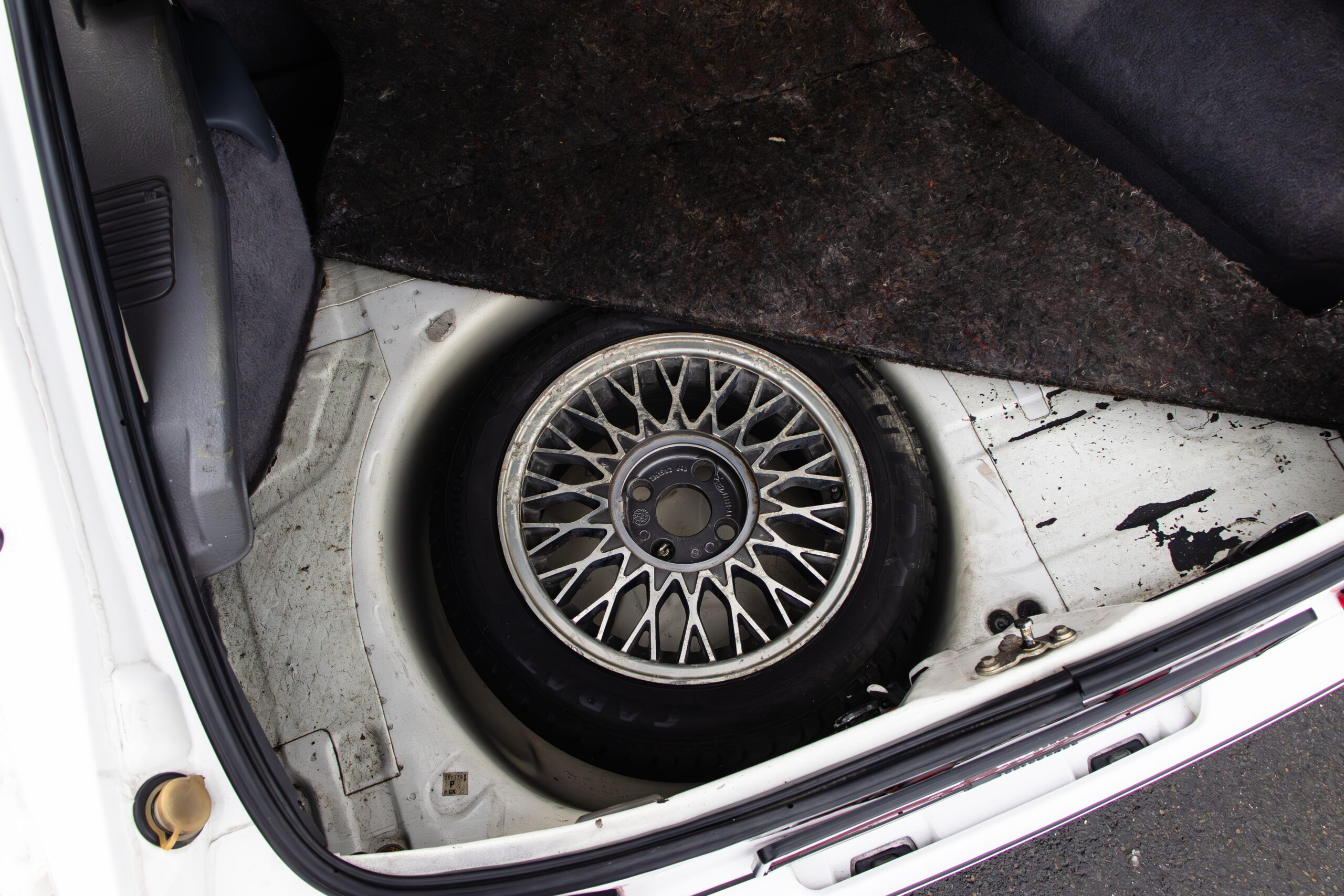
- €6,000 of servicing carried out
- European-specification car – originally supplied in Italy
- Registered in the Czech Republic
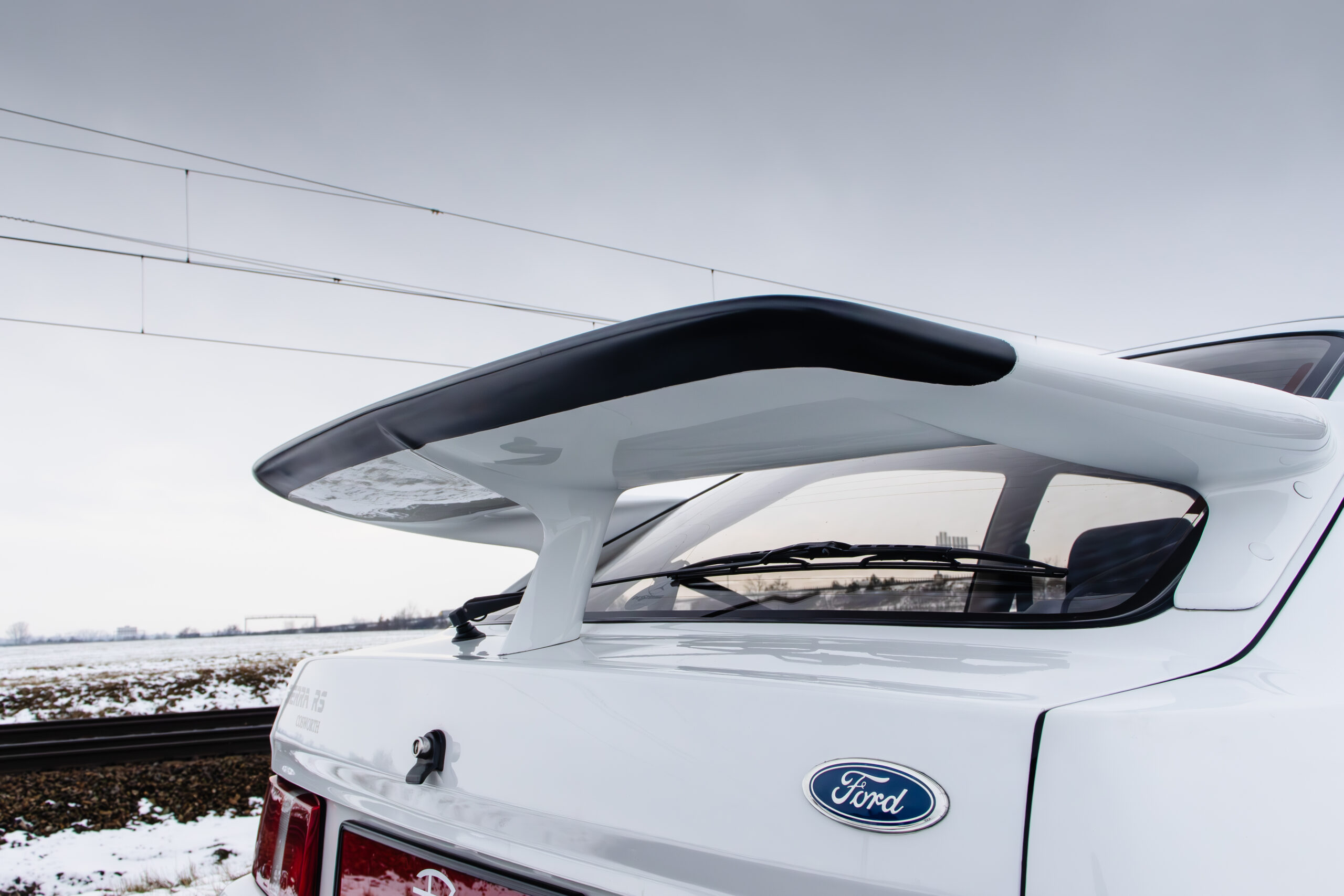
- Diamond White paintwork
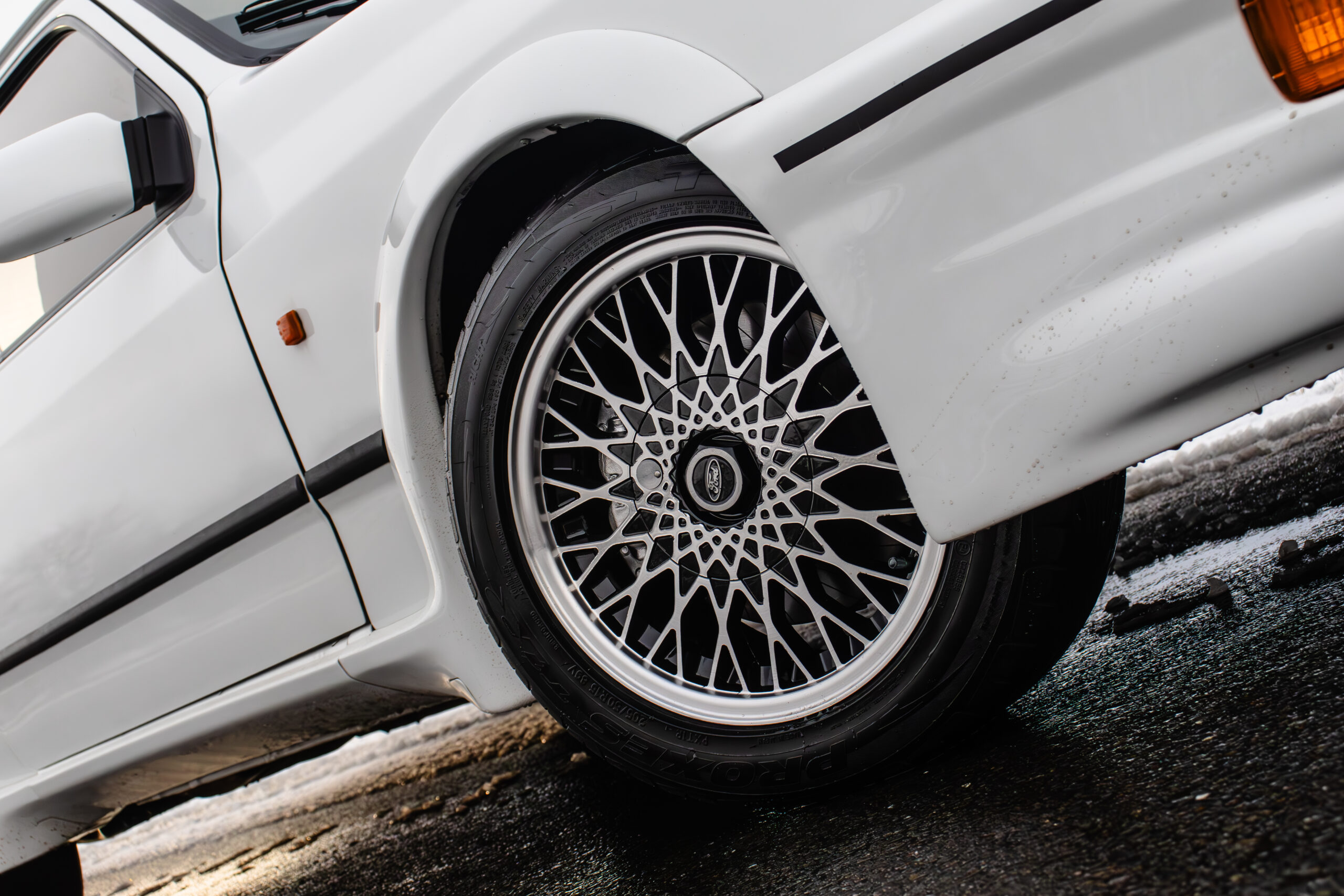
- 15-inch polished alloy wheels
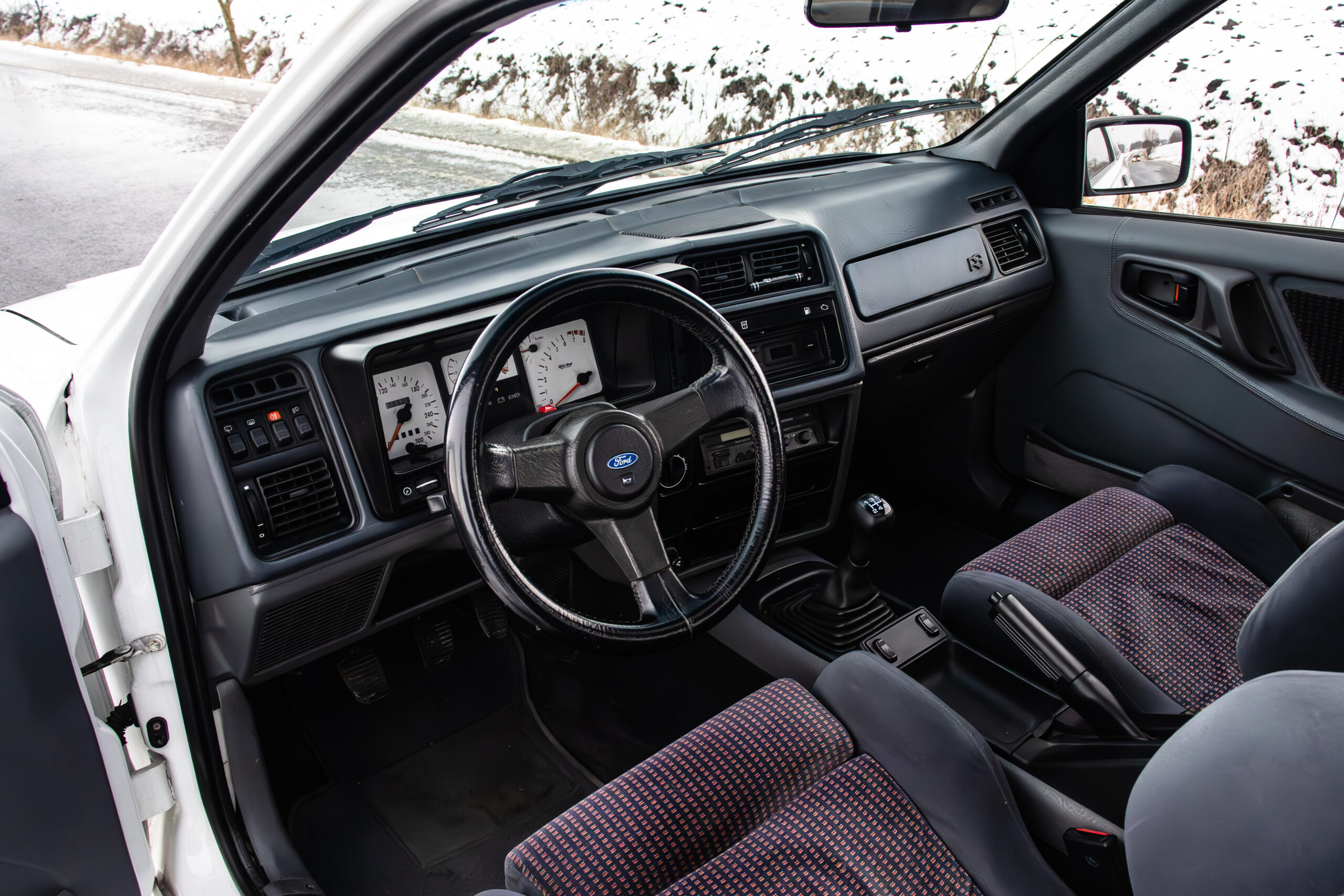
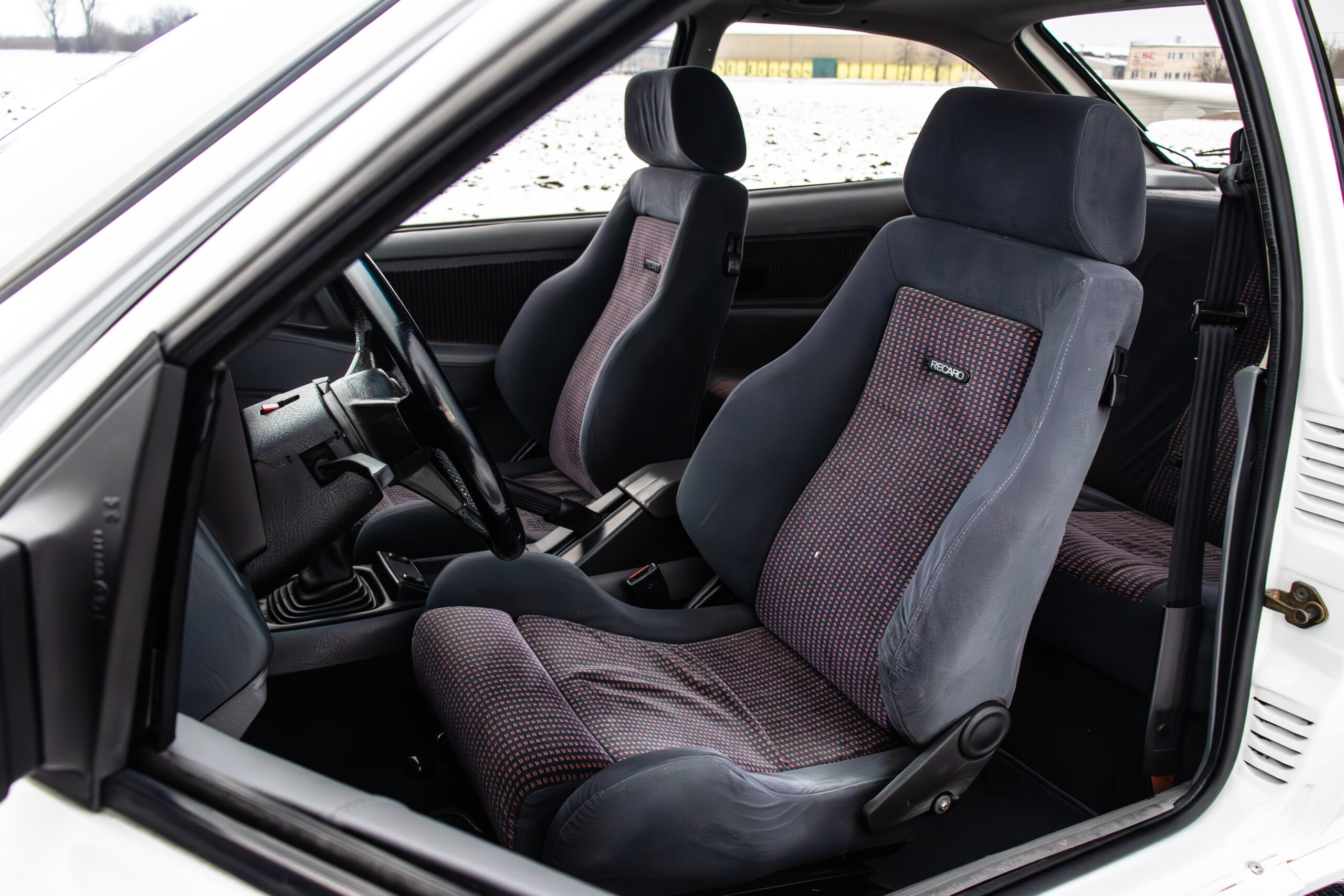
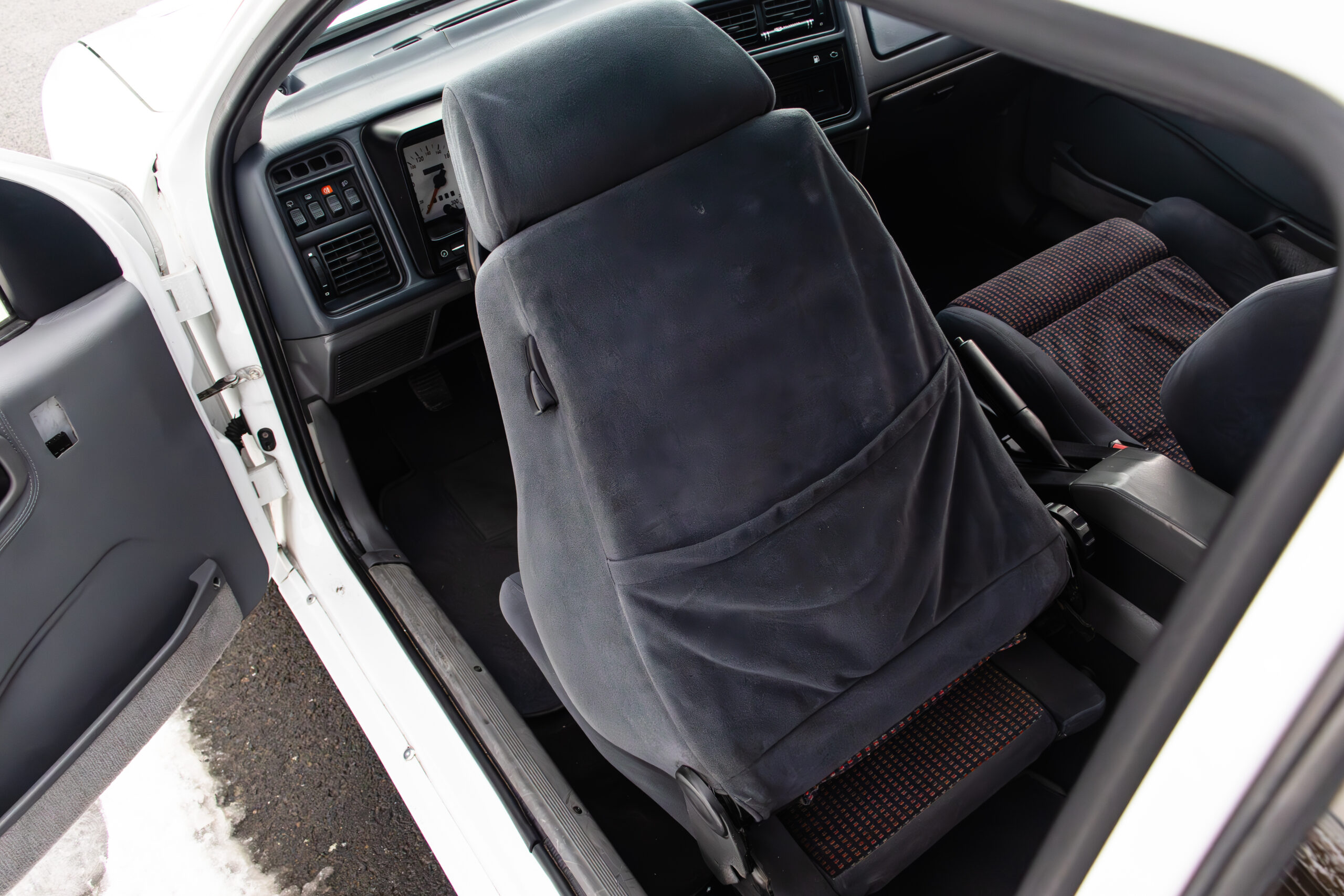
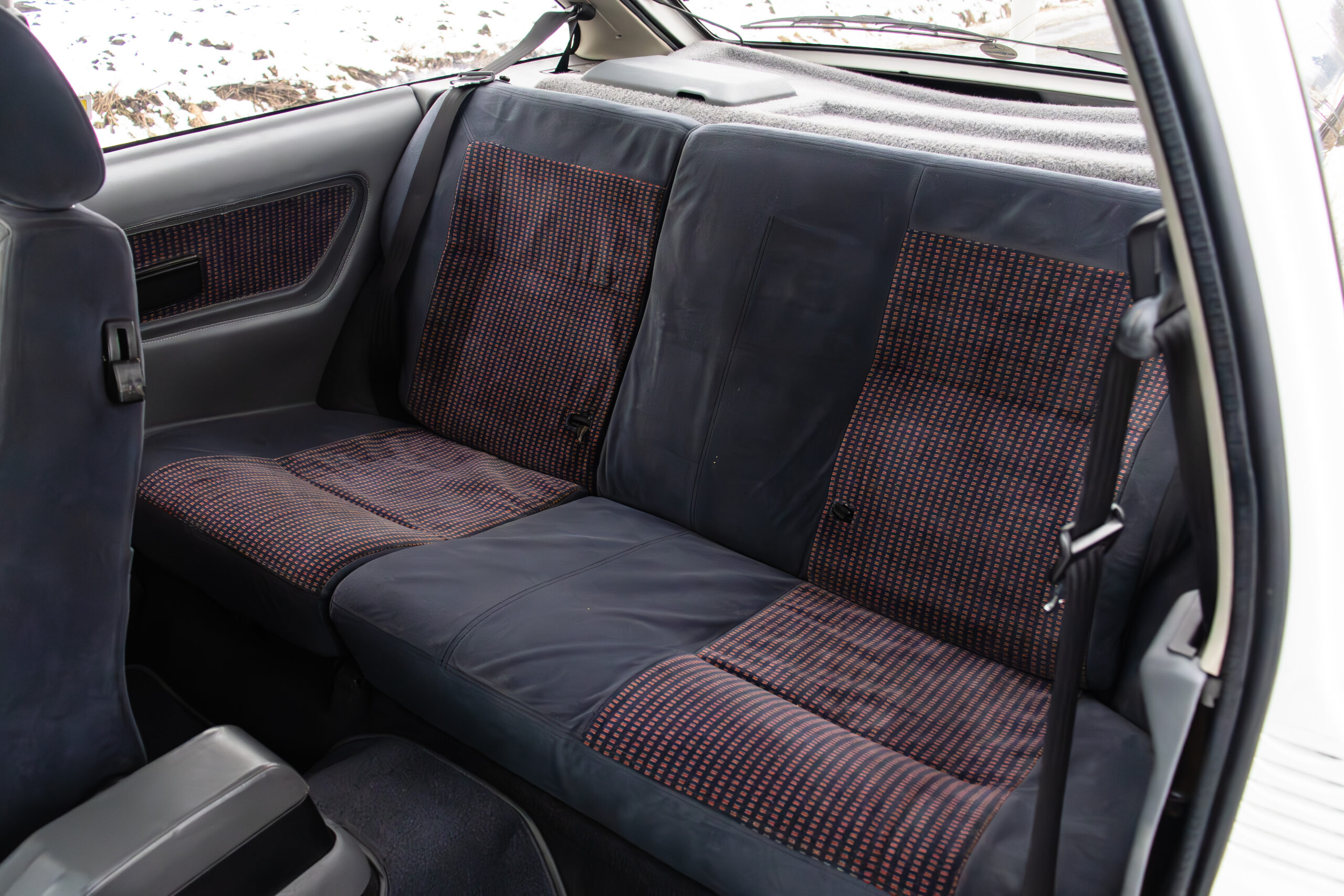
- RECARO seats
- Sunroof
- Three-spoke leather steering wheel
Fill in the form and we will get back to you as soon as possible.
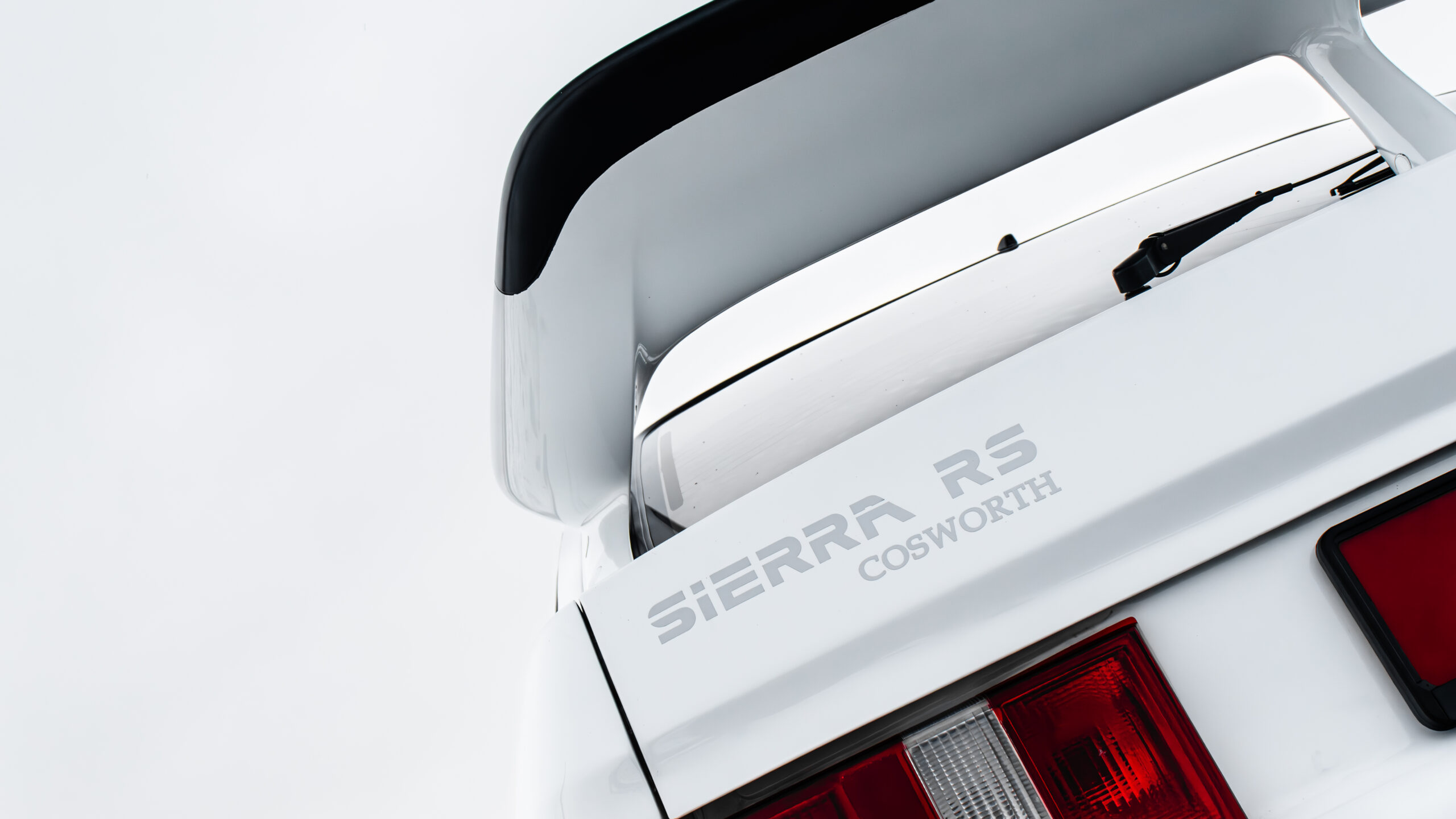
The Ford Sierra RS Cosworth made its debut at the 1985 Geneva Motor Show, immediately attracting attention with its dramatic styling and motorsport-derived engineering. Developed in collaboration with British engineering specialist Cosworth, it was created primarily to homologate a competitive Group A racing car. Production began in 1986 at Ford’s Genk plant in Belgium, with the three-door body based on the Sierra.
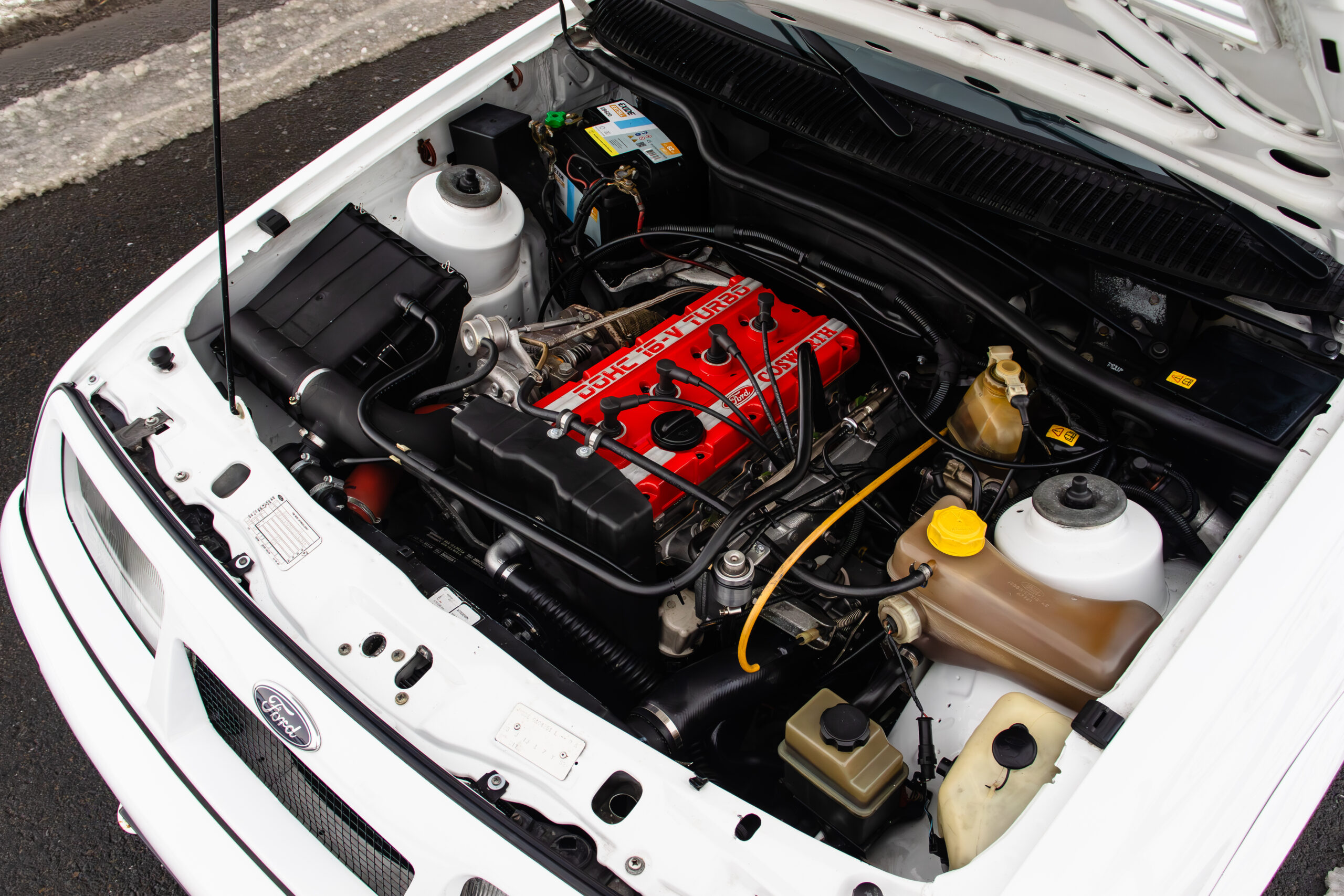
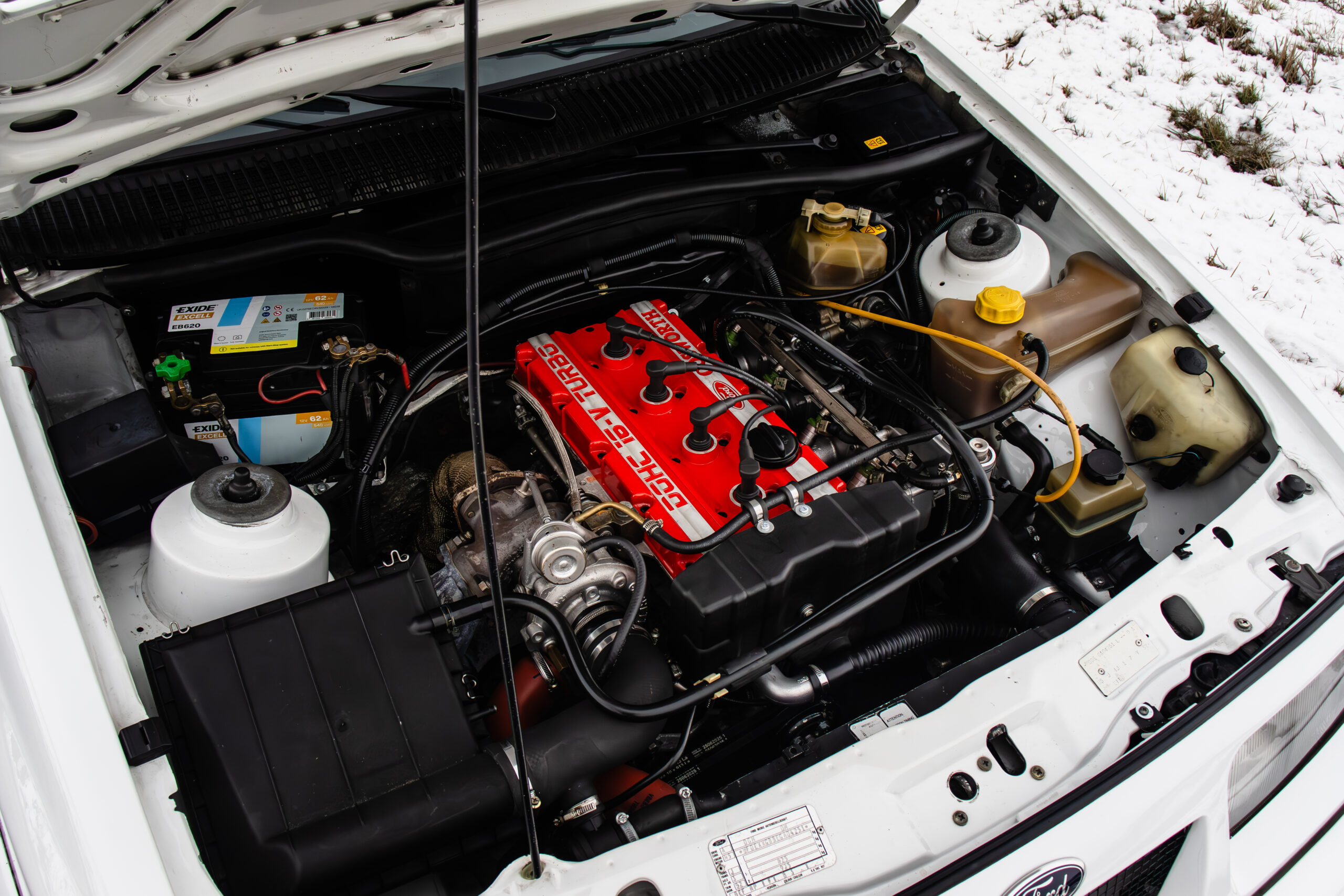
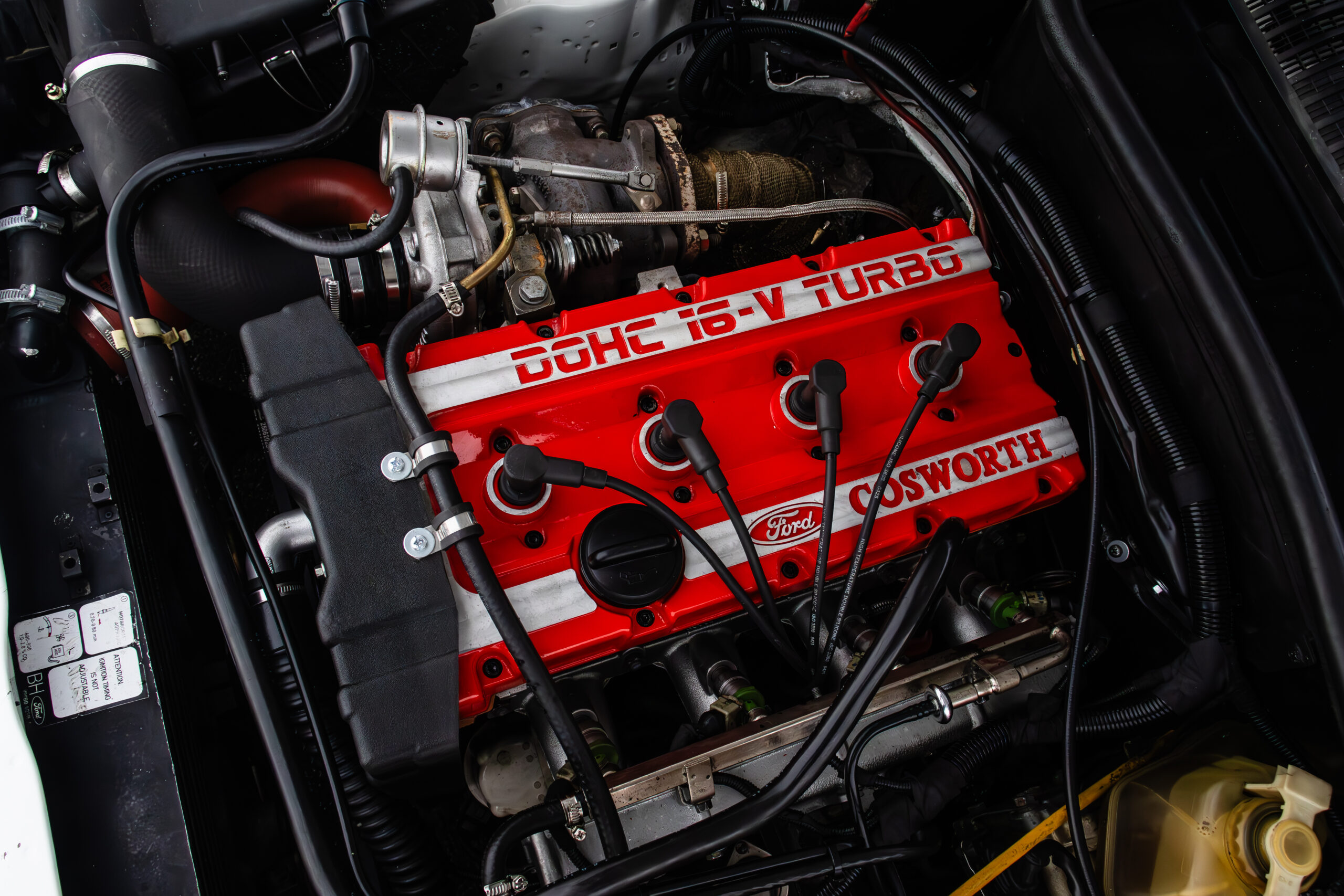
Under the bonnet sits a turbocharged 2.0-litre DOHC inline-four, developed by Cosworth and known as the YB. Equipped with a Garrett T3 turbocharger and intercooler, it produces 204 PS and around 277 Nm of torque.
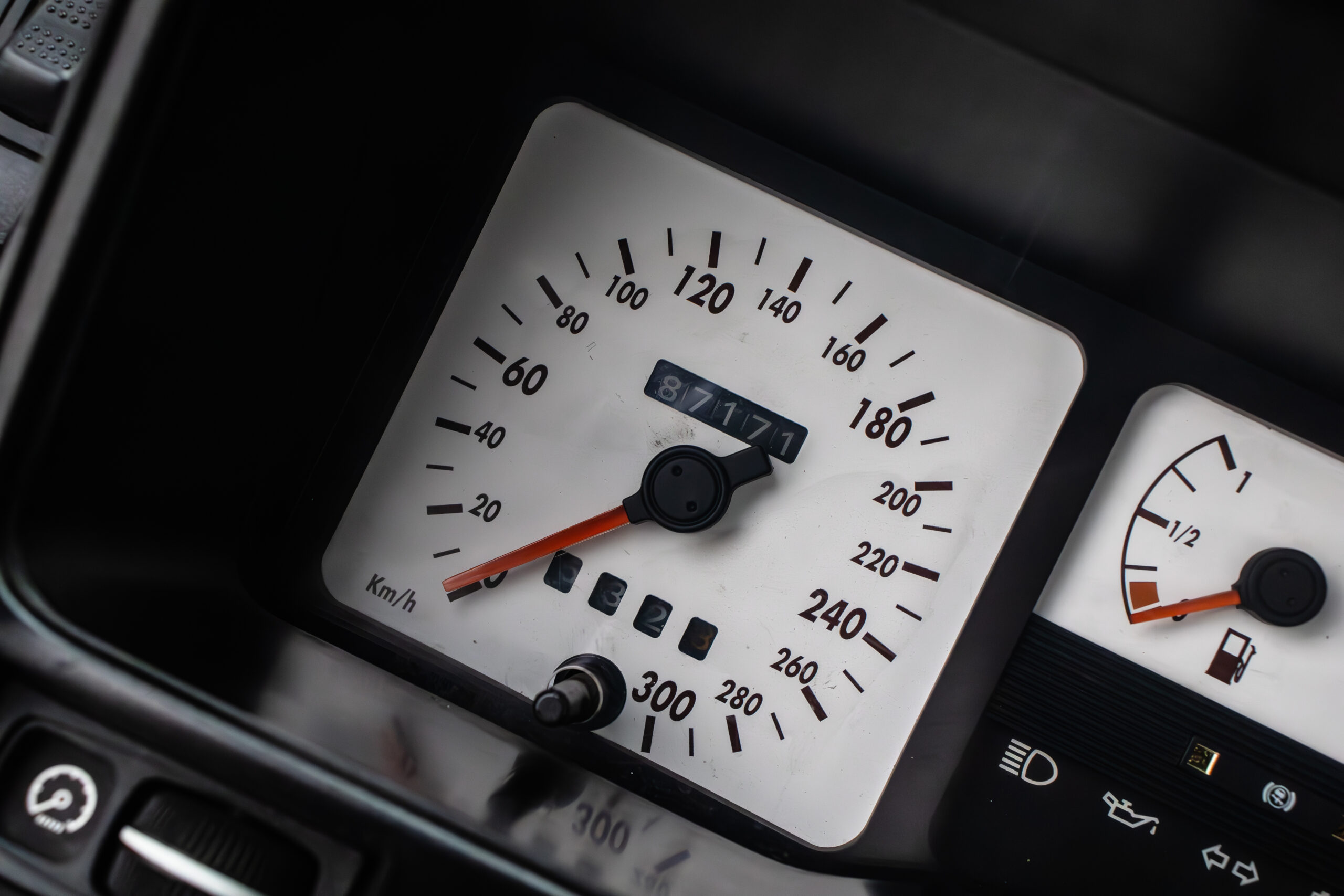
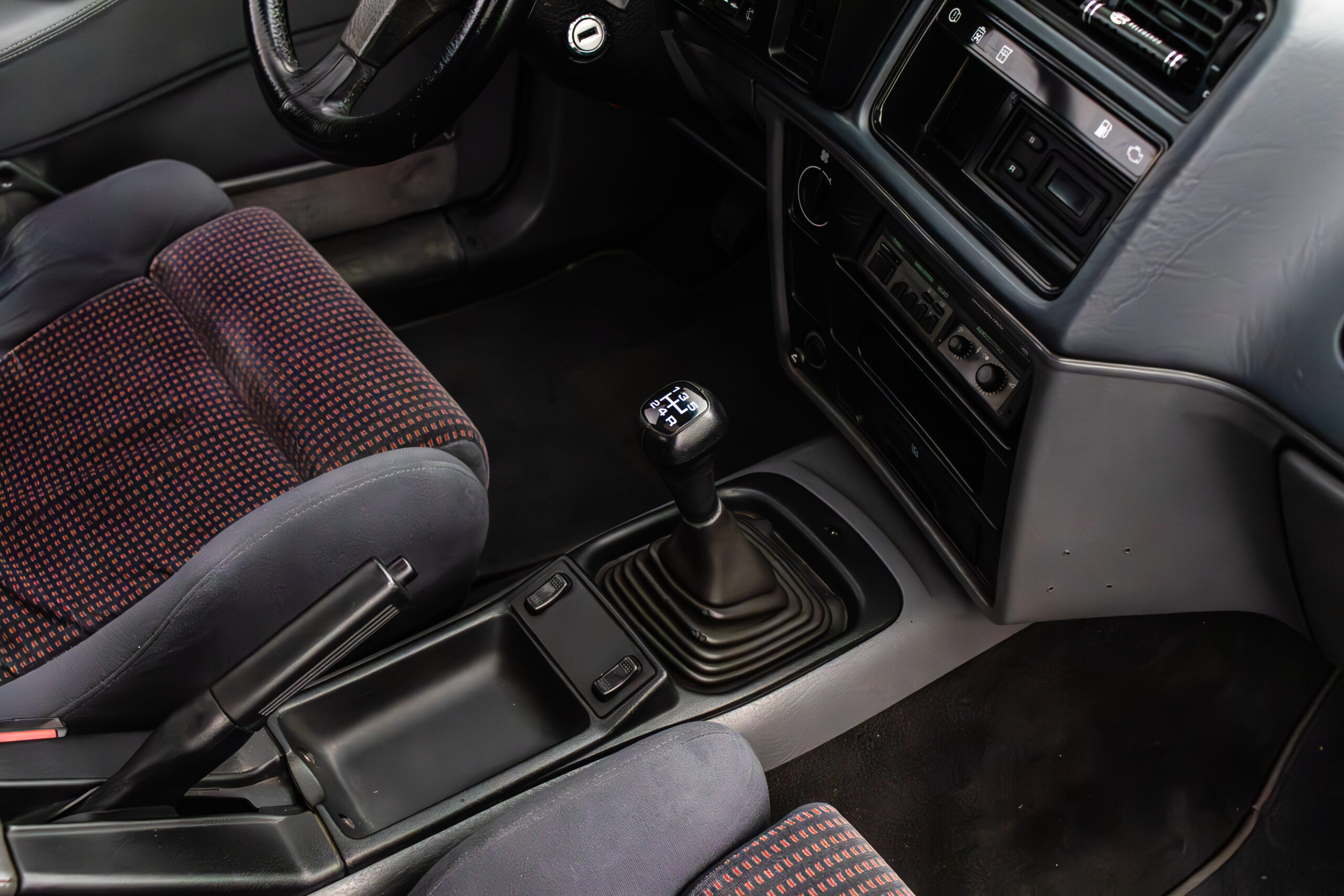
Power is sent to the rear wheels through a robust five-speed Borg-Warner T5 manual gearbox. The Sierra RS Cosworth accelerates from 0–100 km/h in under seven seconds and reaches a top speed of more than 230 km/h – remarkable performance for a road car of its era.
In 1987, Ford introduced the limited-production Sierra RS500 Cosworth, with 500 examples produced to support an even more competitive racing specification. Converted by Tickford, the RS500 featured a larger turbocharger, revised engine components and an upgraded fuel system. The road-going version produced around 224 PS, while competition cars eventually developed well over 500 PS.
The RS500 went on to become one of the most successful and desirable touring cars of its generation and remains the ultimate evolution of the three-door Sierra Cosworth.
The Sierra RS Cosworth quickly achieved cult status, both through its success in motorsport and its extraordinary road performance. In the UK in particular, its combination of speed, distinctive styling and relatively accessible performance also made it notorious as a target for theft.
Insurance costs became exceptionally high, and some insurers were reluctant to cover the model at all. This notoriety became part of the Sierra Cosworth story and only added to the car’s formidable reputation during the late 1980s.
Following the end of three-door production, the more discreet four-door Sierra Sapphire RS Cosworth arrived in 1988. Mechanically closely related to its predecessor, it offered greater practicality and considerably more understated styling.
In 1990, Ford introduced the Sierra Sapphire RS Cosworth 4×4, adding four-wheel drive for improved traction and expanding the car’s potential in disciplines including rallying.
Approximately 5,500 examples of the original three-door Sierra RS Cosworth were produced, together with the 500 RS500 homologation cars. Later Sapphire versions were built in greater numbers.
With its Cosworth-developed turbocharged engine, rear-wheel-drive chassis and extensive competition pedigree, the Ford Sierra RS Cosworth became far more than simply a fast version of a family car. Today it stands as one of the defining European performance cars of the 1980s and one of the most important road-going Fords of its generation.
Poznámka: v rámečku máš 276 Nm, zatímco běžně uváděná tovární hodnota pro Sierra RS Cosworth je 277 Nm. Na webu bych doporučil sjednotit na 204 PS / 277 Nm.